Workforce Management Software: 8 Unique Ways To Optimise Your Fleet

An optimised workforce is like the beating heart of a business. 

It takes sophisticated technology and data to ensure that staffing levels meet the demands of customers, meet task deadlines and stay within budget.

Fleet managers need workforce workforce solutions to help them manage their drivers and activities at any time of the day.

Let’s dive into how workforce management software can help you optimise your workforce and get the most out of your fleet. 

In this article, you will:

  • Learn the definition of workforce management and fleet optimisation, and why it is important for your business profits
  • Uncover the five core functions of workforce management software
  • Identify the common challenges in workforce management so you can correct these
  • Find the top eight benefits of workforce management solutions for your business
  • Learn how to improve the workforce management in your fleet, using Cartrack’s software platform

What is workforce management?

This involves optimising and tracking your organisation’s most important resource – people.

To achieve successful workforce management, employers should strive to strategically allocate their people and resources, track staff attendance and comply with workplace laws and regulations that change. This will optimise the productivity of their workforce and reduce various risks, such as paying employees less than what they should be paid due to mismanagement.

In addition, businesses can improve customer service and overall turnover, because they are not hiring unnecessarily, but rather optimising the processes for retaining their existing employees, saving them extra money on recruitment costs. This will also save them time spent on admin so they can free up time to focus on better ways to meet their customer’s needs and grow their business. 

In addition, Workforce management contains processes that are well-integrated, especially if an organisation has multiple departments with many employees, which could make it more difficult and complex to manage these employees. They need to be in sync and communicate well together to get the work done. 

This is where a good work management software solution comes into play but how can we apply this to a business? 

What is an example of effective workforce management software?

In the fleet management industry, a software solution that offers work log reports and driver ID tags, such as Cartrack’s, can help a fleet manager improve his workforce and easily manage his drivers on the road.

The technology makes it compulsory for drivers to tap the tag sensor in the vehicle or machine in order to start or stop operating it. This unique tag can, in turn, indicate their actual working hours. These times are then fed through to the fleet platform where a fleet manager can pull up a report with all the vehicle activity data, and even receive alerts letting them know when drivers clock in or out. This gives them full visibility of driver attendance and fleet activity, which helps them pay wages more accurately, and improves employee accountability.

Another reason fleet managers love Driver ID tags is the control it gives them. They can assign drivers certain tags that only work for certain vehicles. This helps them prevent any unauthorised usage of vehicles or equipment, helping them protect and manage their fleet. It’s also a great time saver. All this data and activity is recorded so managers don’t need to manually do this, which frees them up to focus on more pressing tasks.
What_is_an_example_of_effective_workforce_management_software

Why is workforce management important?

If you choose a workforce software solution, there are many ways it can benefit your business. Here are just a couple of key examples why it is important and how it can make your operations more productive, cost-effective and compliance-friendly.

  • Reduced compliance violations: Easy tracking of employee attendance ensures that companies are on top of their payroll and are complying with the state labour laws.
    ‍
  • Less workplace safety incidents: More safety violation alerts will ensure that you manage environmental health and safety incidents more effectively.
    ‍
  • No staffing shortages: Processes for existing staff allow them to be more productive, reducing the costly need to hire new staff.
    ‍
  • Cost management: With a workforce more optimised, businesses can retain their staff better, and they won’t incur additional costs hiring new staff, helping them reduce unnecessary recruitment costs.
  • Efficient processes and workforce: Staff will naturally be more productive as business tasks are organised and allocated more strategically.

Most businesses need a quick and easy solution that include these basic examples, which is why workforce management software is a great option, no matter what industry you’re in.

Here are the top eight benefits of workforce management solutions

Now that you know some common pitfalls in workforce management, here’s how a software solution can help address those challenges.

  1. Control staffing costs

    Software technology will enable employers to know exactly how much labour is needed to complete all their tasks. It will give them a better overview of tasks to meet business demands and will help them easily pinpoint where staff is over and under-resourced, so they allocate staff accordingly. If there’s overstaffing and excessive overtime is being used, businesses can incur major unnecessary costs in cases where staff and overtime are excessive, so just being able to identify and rectify this can save a business money.
    ‍

  2. Effective payroll

    There’s a way for you to have a more reliable payroll system in place, with the right software, which will automatically analyse hours worked, pick up overtime and will then calculate how much employees need to be remunerated. This will eliminate repetitive data entry and manual calculations, in turn minimising human errors and payroll inefficiencies.
    ‍

  3. Easily compare with competitors

    Software helps businesses create benchmarks against other competitors in a similar industry or size, especially when it comes to attendance data and productivity levels of their employees. If their workforce isn’t measuring up to competitors, a business has the tools to take action. This is important because if they don’t, competitors can provide better service and dominate the market by being more efficient.
    ‍

  4. Measure the productivity of your workforce

    A software platform will help you create key performance indicators and task schedules for your staff. You can also analyse their progress with tasks, using reports from the platform. This will help you see if they are being productive. You can also analyse if schedules are effective and see if changes are needed for your workforce to meet business objectives.
    ‍

  5. Create smarter schedules

    With real-time data, employers can easily see which shifts need to be filled, so they can immediately fill them before they face a staff shortage. They can also create schedules by location, department or job for improved scheduling in the company.
    ‍

  6. Minimise compliance risks

    Easily manage leave balances and employee benefits that comply with state laws, using a software system that has automated workflows that track this data. A system can also have integrated online recordkeeping and documentation for compliance. This is helpful if there’s ever an audit by a government agency or if there is a potential breach of compliance as your business will have the data to mitigate the situation and avoid putting the company’s reputation at risk.
    ‍

  7. Empower your employees

    Use workforce software to improve communication with your employees, so you can make them feel more informed and help them reach your business standards easily. This will make them feel more empowered and motivated at work. You can also empower your employees further, by creating fair schedules that help them also meet their personal obligations, while still meeting the demands of the business. For example, they can have a say in their schedules with self-service features to update availability, swap shifts, request time off, and pick up extra shifts.
    ‍

  8. Fewer errors and less admin

    Automate the attendance of your employees to minimise any human errors. A system can accurately calculate how many hours an employee has worked and automatically send that through to payroll. This creates less admin for HR because they won’t need to manually call the employees regarding hours worked or if there are any changes in the system.

If you are a fleet manager, optimising your workforce is important to improve the logistics, driver behaviour standards, and bottom-line costs of your fleet. We’ll give you further insight into workforce management software that can help you manage your workforce better so you can improve the processes in your fleet.

Here_are_the_)top_eight_benefits_of_workforce_management_solutions

Five core functions of workforce management software

According to Garner Inc, these are five principle functions that are found in a typical workforce management solution. Next time you’re shopping around for a solution to optimise your workforce, make sure you tick these five crucial boxes.

  1. Labour scheduling: A software system should give you the insight to see how many employees are required for a particular job at any given time. You will then be able to strategically divide the labour in your workforce and ensure that the workload is evenly spread out, the demands of customers are met and all skill sets are used at optimum.
    ‍
  2. Data collection: You will need data and detailed information from a platform so you can create reports, compare processes driven by data, and make decisions, to assess if your workforce is working for you, or if there are areas that are lacking.
    ‍
  3. Leave and absence management: An automated leave management system makes it easy to track, approve, or deny employee leave requests so you comply with leave regulations.
    ‍
  4. Task and activity management: Maximise productivity with your staff members by giving them the software tools they need to perform duties, which includes task management scheduling, enabling employees to be assigned to the right activities so they are updated on company tasks.
    ‍
  5. Attendance and payroll: A system will help you ensure attendance data is captured easily and accurately and that staff are paid for the hours they work, ensuring that there are fewer payroll errors.

We could quickly give you all the solutions to help you better manage your workforce but it will be way more beneficial if you understand the challenges first.

What are the challenges of workforce management?

If you answer “yes, that’s my challenge” to any of these, it is a good indication that you are in need of a software platform that can help in one or more of the following ways.

Employee time attendance and tracking

If your employees have to manually log their hours when signing into work, it could cause more errors when tracking their hours worked, create unnecessary paperwork, and take longer for management to process their working hours. This challenge can easily be solved with an attendance-tracking software solution.

Scheduling and rostering

You might require your employees to work different shifts scheduled for different parts of the day, and you might require more staff depending on project demands during certain periods. Paper-based rostering for this would take up too much time and create inefficiencies, which is why work automation will help managers face the challenge of employee rostering.

Managing absenteeism

Unplanned absences can test a business due to the extra costs of covering the absences and the losses incurred while the absent employee is replaced. It will be challenging for a business if they cannot manage absences, especially with a large workforce, where they will need immediate replacements to fill important roles, such as in a pressurised sales environment.

Employee self-service

Employee Self-Service solutions allow employees to view their rosters, swap shifts, request absence or annual leave, and view their information. Unfortunately, it will not be possible to accommodate everyone’s requests at the same time and it is often necessary to get through these requests to ensure the company still functions fully. If this information is not stored digitally, information can get lost, which can cause issues with labour compliance and create a potential admin crisis.

Why workforce optimisation and management should be a priority

Fleet optimisation means making the most effective use of your fleet, cutting costs, maximising productivity and ensuring best practices for your operations. It’s also about getting the most out of your vehicles or assets for less.

Basically, better managed and more optimised fleet means more productivity, deliveries, satisfied customers, revenue and profit. And that means, less costs, mileage, fuel usage, emissions released and drivers, and vehicles needed – every fleet manager’s dream.
Why_workforce_optimisation_and_management_should_be_a_priority

How to improve your workforce and fleet with Cartrack’s software 

Here’s how a telematics software platform from Cartrack Kenya can help you take your fleet from good to great.

  • Create driver schedules and communicate effectively with your drivers

    Schedule drivers to jobs or deliveries easily. Use Cartrack Delivery to view driver statuses and assign jobs in real time to your nearest available drivers. Drivers can also accept or reject tasks and review their schedules ahead of time. This allows them to communicate with managers via the mobile app, and notify them on the progress of deliveries, just by tapping the status buttons on the app. Managers can also view driver statuses to easily assign tasks to their nearest available drivers, and use the magic optimising tool to ensure the quickest and safest routes are taken for faster delivery turn-around times.
    ‍

  • Enhance driver training with data insights

    You can receive detailed, automated driver behaviour reports for each driver from the Cartrack Kenya platform. These reports can show you where your drivers are speeding, braking harshly, idling excessively and cornering fast. You can then use these insights to help grow your workforce by showing drivers where they need to improve, making them more accountable, and creating a safer, more efficient driving culture in your business.
    ‍

  • Keep your whole workforce connected

    Seamlessly connect your drivers on the road with your team in the office, keeping everyone up to date with the latest fleet activities. When your drivers are assigned jobs, they can automatically keep you updated on their progress in real time, allowing your office staff to see the status and progress of every job. If a vehicle breaks down or is delayed, fleet managers can immediately view and use the insights from Cartrack’s GPS tracking software to assist their drivers.
    ‍

  • Accurate and easy fleet payroll

    Give each of your drivers ID tags that require them to tap the sensor on the vehicle or equipment in order to start and stop using it. Fleet managers will receive automated log reports, indicating the exact hours spent on a job. You can use these reports to help accurately pay staff wages – eliminating payroll errors and any wage disputes.
    ‍

  • Increase driver safety and productivity

    Use AI-powered and live-streaming camera technology to track driver behaviour. These cameras are designed to audibly alert drivers in real time when it detects forms of dangerous driving gestures like fatigue, smoking, cell phone use and more, allowing your drivers to quickly rectify their behaviour and prevent a possible collision. This technology makes drivers more aware and accountable for their actions, which in turn makes them more productive and professional when on duty.

Drive your workforce to optimum success with Cartrack Kenya

When it comes to finding the best workforce management tool for your fleet, Cartrack Kenya is miles ahead of the game. With over 15 years of experience in providing businesses of all sizes with industry-leading telematics software, let Cartrack Kenya take your fleet’s workforce from average to optimal.
Chat with Cartrack Kenya today.

What is ADAS? Never Worry About Devastating Collisions Again

Imagine a world where driving becomes not only safer but also smarter. A world where accidents are significantly reduced, thanks to cutting-edge technology that anticipates potential dangers and provides timely warnings.

In this article, you will:

  • Develop an understanding of what ADAS is and how it works
  • Unpack the importance of ADAS
  • Discover the top 5 benefits of ADAS for your fleet
  • Find out how Cartrack’s ADAS software can boost fleet safety, efficiency, and savings
  • Read about a Cartrack Kenya ADAS success story

ADAS: What it means and what it is

ADAS stands for Advanced Driver Assistance Systems. These systems are a collection of advanced digital technologies and features integrated into modern vehicles. These advanced technologies and features enhance driver safety by improving the driver’s ability to react to dangers on the road to reduce minor and devastating accidents.

From the humble seatbelt to the familiar traffic lights and road lanes, the quest for safer roads has been relentless. Today, nearly all automobile collisions are caused by human error, fortunately, we can prevent this through ADAS through early warning and automated systems such as:

  • adaptive cruise control
    ‍
  • lane departure warning
    ‍
  • automatic emergency braking
    ‍
  • blind-spot monitoring
    ‍
  • pedestrian detection
    ‍
  • parking assistance and more

Seemingly, the primary goal of ADAS is to prevent accidents, reduce the severity of collisions, and enhance overall road safety by alerting the driver to potential hazards, assisting in maintaining safe distances from other vehicles, monitoring lane positions, detecting and responding to obstacles, and providing assistance during parking manoeuvres.

According to the Insurance Institute for Highway Safety, forward collision warning systems cut front-to-rear crashes by 27%, rearview cameras reduce backing accidents by 17%, while automated rear braking decreases them by a secure 78% – all thanks to ADAS.

Let’s find out how it works.

ADAS_What_it_means_and_what_it_is

How ADAS works: a simple explanation 

ADAS works by using camera-based sensors, intelligent algorithms, as well as artificial intelligence and machine learning to heighten drivers’ awareness of their surroundings and enhance vehicle safety. These cutting-edge solutions consist of multiple chips known as systems on a chip (SoCs) to analyse data from the surrounding environment, such as road conditions and other vehicles, to provide real-time warnings and assistance.

To put it simply, here’s how ADAS operates:

  • Sensors and Cameras: ADAS systems are equipped with sensors and cameras strategically placed around the vehicle. These sensors detect and gather data about the vehicle’s surroundings, including other vehicles, pedestrians, road markings, and obstacles. For optimal visibility, these ADAS cameras are usually mounted inside the vehicle by the front windshield, behind the central rear-view mirror.
    ‍
  • Data Processing: Data collected by the cameras and sensors is processed in real time by onboard computer systems. These systems analyse the data using predefined patterns and algorithms to identify potential risks or hazards.
    ‍
  • Driver Assistance Features: Based on the analysed data, ADAS provides driver assistance features to enhance safety. These features include:

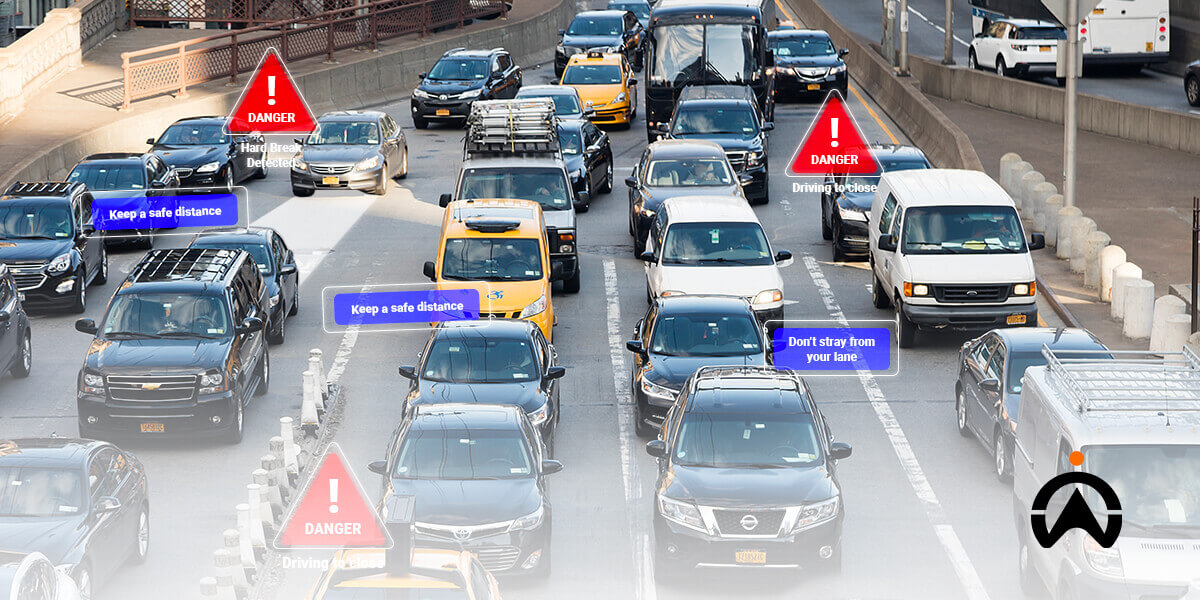
    – Forward Collision Warning: Alerts the driver if the vehicle is approaching another vehicle or obstacle too quickly, helping to prevent rear-end collisions.

    – Lane Departure Warning: Detects when the vehicle drifts out of its lane without signalling and alerts the driver to take corrective action.

    – Adaptive Cruise Control: Automatically adjusts the vehicle’s speed to maintain a safe distance from the vehicle ahead, providing a more comfortable and controlled driving experience.

    – Blind Spot Detection: Warns the driver of vehicles in blind spots, reducing the risk of lane-change accidents.

    – Automatic Emergency Braking: Detects possible collisions and automatically applies the brakes to reduce the impact or avoid a collision altogether.
    ‍

  • Audible and Visual Alerts: ADAS systems further provide audible or visual alerts to the driver through sound signals, dashboard displays, or heads-up displays. These alerts draw the driver’s attention to potential dangers and prompt them to take appropriate action to prevent collisions.

What’s the importance of ADAS?

In today’s fast-paced and technology-driven world, the automotive industry has witnessed remarkable advancements, transforming the way we drive and ensuring greater safety on the roads. With this, ADAS systems have become crucial in mitigating human errors, improving road safety, and shaping the future of vehicle and driver safety.

Let’s delve into the significant importance of ADAS:

  • Accident Prevention: With human error being a leading cause of accidents on the road, ADAS technologies, such as forward collision warning, lane departure warning, and automatic emergency braking, act as a safety net preventing devastating collisions.
    ‍
  • Risk Mitigation: ADAS features play a crucial role in reducing or eliminating potential safety risks and their severity. By incorporating elements like blind spot detection, rearview cameras, and parking assist systems, drivers can overcome blind spots and navigate challenging manoeuvres with enhanced visibility. This reduces the likelihood of accidents caused by misjudgment or inadequate visibility.
    ‍
  • Informed Decision Making: By providing drivers with real-time alerts about potential hazards, speed limits, and traffic conditions, ADAS becomes a valuable tool that empowers drivers to confidently make road safety choices. This reduces the chances of errors resulting from a lack of awareness or misinterpretation of the road.
    ‍
  • Driver Assistance: In harsh weather conditions or low visibility scenarios, ADAS features like adaptive headlights, rain-sensing wipers, and traction control assist drivers in maintaining control and making the appropriate adjustments to minimise devastating collisions related to harsh weather conditions.
    ‍
  • Safety Redundancy: Even the most attentive and experienced drivers can make errors or be momentarily distracted. As such, ADAS acts as a crucial backup system to compensate for human limitations and serves as an additional layer of safety by detecting and responding to potential dangers when human attention or reaction time falls short.

Overall, by mitigating human errors and providing critical assistance, ADAS technologies significantly contribute to reducing accidents, injuries, and fatalities on the road. They enhance the overall safety of your fleet by complementing human capabilities, making driving safer for everyone.

What’s_the_importance_of_ADAS

Top 5 benefits of ADAS for your fleet

ADAS integration has become increasingly vital in the fleet industry. This is due to its critical role in various other industries such as cold chain logistics, construction, rental and leasing, taxi services, and transportation and logistics. With the high accident statistics, ADAS is a necessary component for improving safety and efficiency in fleet operations.

Let’s unpack the top 5 benefits of ADAS for your fleet:

  1. Enhanced Safety: ADAS plays a crucial role in improving fleet safety by providing features that assist drivers in avoiding potential hazards and maintaining safe driving practices. This proactive approach significantly reduces the risk of accidents and promotes a culture of safety among drivers.
    ‍
  2. Accident Reduction: Providing timely warnings and assistance to drivers by alerting them of potential road dangers, ADAS reduces the number of collisions. This results in lower costs associated with your fleet vehicle repairs, insurance claims, and potential injuries incurred by drivers as a result of accidents.
    ‍
  3. Driver Training and Monitoring: Advanced ADAS features like fatigue detection identify and help you address risky driving behaviours within your fleet, promoting safer practices and reducing the chances of accidents caused by driver error. This ensures ongoing improvement in driver performance and overall fleet safety.
    ‍
  4. Improved Fleet Efficiency: With ADAS features such as route optimization, real-time vehicle tracking, and predictive maintenance system, fleet operations can be streamlined and optimised, downtime can be reduced, and overall fleet performance can improve. This can result in increased productivity and profitability for fleet businesses.
    ‍
  5. Cost Savings: The integration of ADAS in fleet operations translates into substantial cost savings. Fewer accidents thanks to ADAS, result in reduced expenses for vehicle repairs, insurance premiums, and liability claims. Moreover, ADAS features like adaptive cruise control contribute to improved fuel efficiency, reducing fuel consumption and expenses over time.

Although this is an impressive list of benefits, there’s just one catch: only top-notch ADAS can make them happen.

Cartrack ADAS for fleet efficiency, safety and cost savings

Introducing Cartrack’s ADAS, a cutting-edge solution that prioritises driver and fleet safety. Our ADAS analyses both internal (in-cabin) and external (road) driving environments to deliver unparalleled protection by:

  1. Detecting and informing drivers of any potential threats.
    ‍
  2. Sending real-time audible alerts when high-risk behaviour is detected and capturing footage of the event and uploading it to the cloud.
    ‍
  3. Alerting fleet managers and admin of any risk events and granting them access to the footage for effective training.

With our cutting-edge features, Cartrack ADAS cameras help fleets become more efficient, safer, and more cost-effective:

  • AI and Live-stream Technology:

    Use our AI-powered and live-stream internal or external cameras to safeguard your drivers, fleet, and precious cargo in real time. By providing a comprehensive view of your fleet operations, these cameras enhance efficiency by enabling proactive decision-making, optimising routes, and reducing downtime from potential collisions. This technology ensures the safety of your fleet by detecting potential risks and allowing for immediate intervention. Moreover, by minimising accidents and damages, they lead to significant cost savings in terms of vehicle repairs, insurance premiums, and legal liabilities.
    ‍

  • Front Collision Warning:

    Our ADAS cameras diligently monitor the distance between vehicles, providing your fleet drivers with timely alerts to prevent rear-end collisions and bumper disasters. This proactive safety measure not only protects drivers’ lives but also prevents costly accidents, vehicle downtime, and subsequent repair expenses. By avoiding such incidents, your fleet efficiency is improved through uninterrupted operations and reduced downtime, thus resulting in significant savings.
    ‍

  • Smoking Detection:

    Say goodbye to driving and smoking. Our DMS (driver monitoring system) camera instantly identifies smoking incidents, triggering immediate alerts. By addressing this risky behaviour, it ensures a focused and attentive driving environment, enhancing safety for both the driver and other road users. By eliminating this distraction, you can improve fleet efficiency and reduce the likelihood of accidents, vehicle damage, and associated costs. Additionally, it promotes a positive image for your fleet and reduces potential legal and reputational risks.
    ‍

  • Distracted or Fatigued Driving Detection:

    Our advanced cameras keep a watchful eye on the driver’s head and eye movements to detect any distracted or fatigued behaviour such as yawning. If their attention strays from the road, it sends out in-cabin voice alerts, helping prevent accidents caused by distraction or fatigue. By proactively addressing distracted or fatigued driving, these cameras enhance safety by reducing the risk of accidents and injuries. This improves fleet efficiency by maintaining uninterrupted operations, and minimising delays caused by accidents or driver exhaustion. It also leads to substantial cost savings through reduced vehicle downtime, insurance claims, and potential legal liabilities.
    ‍

  • Mobile Phone Use Detection:

    With incredible precision, our AI camera detects whether a driver is talking on their mobile phone by ear instead of via a Bluetooth handset. By discouraging handheld mobile phone use, it enhances safety by minimising distractions and promoting better driver focus. Thus reducing the risk of accidents, and improving both the safety of your fleet and other road users. Additionally, this promotes safe driving practices and increases fleet efficiency by reducing delays and enhancing overall operational productivity.
    ‍

  • Camera-Covering Detection:

    No hiding. If a driver attempts to obstruct visibility by covering the camera, our system promptly alerts the fleet manager. By maintaining transparency and preventing camera tampering, this ADAS feature enhances safety by ensuring that monitoring and surveillance capabilities are not compromised. It further promotes fleet efficiency by discouraging unauthorised actions and behaviours, minimising potential risks, and preventing unnecessary accidents or incidents. By avoiding such incidents, fleet managers can save costs associated with accidents, vehicle damage, and legal complications, leading to substantial savings in the long run.

    You might be questioning the effectiveness and impact of these features on your fleet. Perhaps you’re wondering if they are truly necessary. Allow me to share a compelling real-life story that delves into the transformative power of these capabilities.

Cartrack_ADAS_for_fleet_efficiency_safety_and_cost_savings

Case Study: A Cartrack ADAS success story

Namdeb is a diamond-mining company that performs land-based prospecting (exploration), mining, and rehabilitation operations and services for (its subsidiary) Namdeb Holdings. Today, Namdeb monitors the utilisation and ensures the safety of over 416 vehicles (LDVs, crawlers, and buses), thanks to Cartrack’s ADAS cameras.

Challenge: Given the nature of the mining industry and the high potential for safety hazards that lead to worker accidents, injuries, and fatalities, Namdeb needed advanced driver-assistance systems (ADAS) to assist them in managing driver behaviour and safety, and monitor the utilisation of all fleet assets.

Solutions: To mitigate driver and safety risks, Namdeb implemented a comprehensive solution from Cartrack. ADAS cameras were installed in their fleet vehicles, enabling effective monitoring and detection of risky driving behaviours such as smoking, cell phone use, and fatigue. These cameras instantly send audible alerts to drivers in real time, allowing them to rectify their actions and prevent collisions. To further enhance safety measures, Cartrack’s Driver ID tags were implemented to monitor driver identities and prevent unauthorised use of vehicles and machinery. Additionally, a hand-held in-cab breathalyser detects alcohol and prevents drivers from starting their vehicles if they are under the influence.

Results: As a result of Cartrack ADAS cameras, Namdeb’s fleet now boasts alert and focused drivers, ensuring peak performance 24/7. With the ability to enforce authorised and sober drivers only, fleet and driver safety has skyrocketed. Additionally, the company maintains a finely-tuned fleet, avoiding both underutilization and overutilization, operating seamlessly in designated mines with top-notch safety measures in place.

Say hello to better safety, saving and efficiency with Cartrack ADAS

Don’t miss out on the opportunity to revolutionise your fleet with better safety, efficiency and savings. Click here, and get a free demo today.

AI Takeover: The Truth About the Future of Telematics

Artificial intelligence (AI) has and is transforming vehicle tracking more than we can imagine.

A concept once only seen in sci-fi movies has leapt from our TV screens into everyday reality. As we witness the growth of artificial intelligence, it’s only natural to wonder how this innovation will further influence the use of telematics.

Let’s take a peek into the future of AI in the world of telematics.

In this article, you will:

  • Understand the fundamentals of telematics and its role in fleet management
  • Explore the rise of AI and its impact on telematics systems
  • Learn about the benefits and downsides of AI in the telematics industry
  • Discover the potential of telematics and AI technology in everyday tasks
  • Uncover your fleet’s true potential with Cartrack.

What is telematics?

Telematics in simple terms, combines informatics and telecommunications, making it a powerful tool for gathering and managing data through technology. Today, telematics is used in various industries, including fleet management.

Imagine you’re a fleet manager responsible for a group of vehicles, such as delivery vans or service trucks. You want to make sure your fleet operates smoothly, efficiently, and safely.

Telematics is the best technology to assist with all these tasks.

A telematics system consists of a tracking device installed in each vehicle in your fleet. These devices connect with onboard diagnostics, enabling continuous communication while storing, sending, and receiving telemetry.

Some examples of telemetry data that can be collected by telematics systems include:

  • Speed – Records the vehicle’s speed, providing insights into driver behaviour and compliance with speed limits.
    ‍
  • Fuel consumption – Monitors fuel consumption and stores data related to fuel usage, enabling analysis and optimisation of fuel efficiency.
    ‍
  • GPS location – Captures the coordinates of the vehicle’s current or historical positions, allowing for accurate tracking and route analysis.
    ‍
  • Vehicle idling time – Monitors instances of prolonged idling and helps identify inefficiencies. This can assist in reducing fuel consumption and emissions.
    ‍
  • Driver behaviour – Analyse driver behaviour, including harsh acceleration, harsh braking, and harsh cornering, providing data to promote safer driving practices and identify areas for improvement.
    ‍
  • Distance travelled – Calculates and stores the distance travelled by the vehicle, allowing for mileage tracking and maintenance scheduling.
    ‍
  • Engine diagnostics – Monitors engine performance and stores diagnostic data like RPM, engine temperature, fuel levels, and error codes, which aids in troubleshooting and maintenance.

With this data, businesses gain invaluable insights into their fleet’s performance, leading to better decision-making, improved asset utilisation, and significant cost savings.

The rise of artificial intelligence

The future of vehicle tracking is here, driven by the power of AI and telematics. As technology advances, vehicle manufacturers are keeping pace by incorporating super-smart connectivity features that allow their vehicles to interface seamlessly with the AI-powered software designed to monitor and analyse them.

Traditionally, telematics systems collected and transmitted data, but struggled to extract meaningful insights on time. Thanks to the growth of IoT (Internet of Things) and the advancement of machine learning algorithms, AI can process and analyse vast amounts of data instantly, providing valuable information about vehicle performance, driver behaviour, and operational efficiency.

This empowers businesses to make data-driven decisions and take proactive measures to improve their operations.

The_rise_of_artificial_intelligence

Six benefits of AI in the telematics industry

So, what makes AI so revolutionary? Well, with easily accessible fleet data, comes swift decision-making and a more hands-on approach to managing.

Let’s explore six more key reasons why AI is a fleet manager’s dream assistant:

  1. Enhanced safety and accident prevention: AI automation in telematics offers real-time feedback to drivers, helping prevent potential accidents. By analysing data, AI can identify risky driver behaviour, provide coaching and feedback, predict risks in route planning, and address safety concerns before they result in costly errors. Automated workflows can also monitor fuel usage and suggest actions to reduce it, contributing to a business’s overall sustainability goals.
    ‍
  2. Actionable insights through data analysis: AI technology with machine learning capabilities allow for analysing of data collected by telematics systems. By identifying patterns and trends, fleet operators can make intelligent decisions and improve operational processes. AI-powered insights provide valuable information about driver behaviour, fuel usage, safety issues, and maintenance, leading to better cost management and increased efficiency.
    ‍
  3. Predictive analytics for proactive management: AI and advanced analytics enable a shift from reactive decision-making to proactive management policies. By leveraging big data, fleet managers can anticipate problems before they become obstacles to operations. Predictive analytics can help reduce costs, improve maintenance, increase efficiency, and promote better driver behaviour, resulting in financial benefits for the organisation.
    ‍
  4. Improved driver behaviour and performance: AI technology can effectively monitor and enhance driver behaviour. By providing continuous feedback and reinforcement of safe driving habits, fleet managers can ensure that drivers practise responsible behaviour on the road. This leads to increased safety, reduced accidents, and improved overall fleet performance.
    ‍
  5. Optimal safety measures: AI technology introduces advanced techniques such as driver behaviour and identification, alarm systems, and geofencing to enhance fleet safety. Real-time monitoring systems enable fleet managers to receive instant notifications and respond swiftly to emergencies. Comprehensive reports generated by AI-powered systems help identify safety deficiencies and facilitate corrective actions, ensuring the safety of the fleet and its drivers.
    ‍
  6. Strengthened data security: As fleets handle large volumes of sensitive data, data security is crucial. In the telematics industry, there is a growing emphasis on increased cybersecurity measures and the adoption of integrated databases. Fleet operators prioritise protecting sensitive information and are investing in strategic management approaches and upskilling IT personnel to meet evolving cybersecurity challenges.

Six downsides of AI-driven telematics

While AI in telematics brings the above-mentioned benefits and many more, there are some challenges that need to be addressed:

  1. Ethical and regulatory concerns: The use of AI algorithms raises ethical considerations regarding transparency and accountability. Clear guidelines and regulations are required to ensure ethical standards are upheld and individuals’ rights are protected.
    ‍
  2. Data privacy and security: Telematics involves collecting and transmitting vast amounts of data, including personal and sensitive information. Ensuring data privacy and security is crucial to protecting against potential misuse or unauthorised access. Robust encryption, authentication mechanisms, and adherence to data protection regulations are essential.
    ‍
  3. Bias and discrimination: AI algorithms are trained on data, and if the training data contains biases, it can lead to discriminatory outcomes. Biassed algorithms may affect areas such as driver behaviour assessment, insurance premium calculations, and personalised user experiences. Efforts must be made to minimise biases, ensure diverse and representative training data, and implement fairness measures in AI models.
    ‍
  4. Integration and compatibility: Integrating AI technologies with existing telematics infrastructure can bring up technical challenges. Compatibility and smooth integration with diverse hardware and software components need to be ensured.
    ‍
  5. Skill gaps and workforce training: The increasing reliance on AI demands a skilled workforce capable of developing, implementing, and maintaining AI systems. Organisations must invest in training programs and upskilling initiatives to bridge the skill gaps and empower employees to work effectively with AI technologies.
    ‍
  6. Cost and resource requirements: AI implementation in telematics may involve substantial costs, including hardware upgrades, software development, and ongoing maintenance. Organisations must carefully assess the return on investment and consider long-term sustainability to justify the expenses associated with AI adoption.

Despite the challenges, AI in telematics still holds immense potential. It empowers transportation, logistics, and various other industries to unlock actionable insights, optimise operations, enhance safety, and create personalised user experiences.

How do telematics and AI technology help fleet managers?

Simplifying tasks, streamlining operations and cutting down on fleet costs are always top priorities for fleet managers.

Let’s see how telematics can become your right-hand man in your quest to get those daily tasks done and dusted quicker.

Say you’re interested in monitoring fuel consumption across your fleet, one of your most costly responsibilities. With telematics, you can track this data in real time. You’ll know which vehicles are efficient and which ones may need attention. This insight allows you to take proactive steps, such as addressing maintenance issues or providing driver training, to improve fuel efficiency and save costs.

If you want to focus more on improving driver safety, telematics also provides valuable information about driver behaviour. It can track factors like speed, harsh braking, and idling time. As a fleet manager, you can use this data to identify risky driving patterns and take appropriate measures to improve safety. For example, if you notice excessive speeding, you can offer training programs or implement driver rewards for safe and responsible driving.

The possibilities are vast with the combination of AI and telematics. AI algorithms can process telematics data in real-time, enabling predictive modelling, intelligent analytics, and personalised experiences.

How_do_telematics_and_AI_technology_help_fleet_managers

How AI-powered solutions will shape the future of fleets

Traditional fleet management systems are making room for a new wave of AI-powered solutions, ushering in a transformative era for fleet management practices. These innovations can unlock new levels of efficiency, safety, and sustainability in the transportation industry.

  1. The prominence of Mobility-as-a-Service (MaaS)

    Initially focused on ride-sharing platforms like Uber, MaaS is now extending its reach to include traditional fleet operations with services like Uber Eats and Courier Butler to enter a $22.18 billion estimated market by 2028.

    Considered the future of mobility, Mobility-as-a-Service allows fleet managers to customise their services and move away from the conventional approach of solely operating and maintaining their own vehicles.

    By leveraging AI and telematics data, fleets can seamlessly integrate with MaaS platforms, offering end-to-end multimodal transportation services. This integration optimises passenger experiences, improves overall mobility efficiency, and enables fleet managers to explore new business models and revenue streams.
    ‍

  2. The impact of the Internet of Things (IoT)

    One of the most popular trends in telematics is the Internet of Things (IoT). It enables the re-engineering of the entire supply chain process by promoting the seamless sharing of information between all stakeholders, such as retailers and manufacturers, and connecting physical vehicles, devices, and sensors with the digital world.

    With IoT and AI-powered telematics systems, fleet managers can now collect real-time data, enabling fleet operators to monitor tyre pressure, monitor refrigerated systems and track vehicle performance.

    How does this work?

    IoT technology in fleet management relies on three key technologies:

    – Wireless communication: This includes technologies like 4G, Bluetooth, and WiFi, which help transmit important information between vehicles and systems.

    – Global positioning system (GPS): GPS enables accurate real-time tracking of vehicle locations, allowing for precise monitoring and control.

    – Onboard diagnostics: Vehicles use diagnostic tools like OBDII and J1939 scanners to perform self-diagnostics and report any issues, making maintenance and troubleshooting easier.

So, it’s not just about keeping up with the latest tech — it’s about seizing the opportunities it brings. By embracing these advancements and leveraging the power of data, businesses can gain a competitive edge, deliver exceptional customer experiences, and propel themselves forward in the dynamic business landscape.

How_AI-powered_solutions_will_shape_the_future_of_fleets

Empower your fleet with Cartrack’s advanced telematics solutions

As the future of telematics and AI unfolds, businesses must prepare for a new era of fleet management. Cartrack Kenya strives to deliver innovative technology to help businesses track, manage and improve their fleet.

Cartrack Kenya offers a suite of telematics solutions designed to streamline operations with robust tracking devices and sophisticated software like:

  1. Advanced telematics technology: With installed tracking units and a smart fleet management platform, Cartrack Kenya enables fleet managers to monitor their vehicles’ location, performance, and driver behaviour in real-time.
    ‍
  2. Predictive maintenance: Cartrack’s telematics and AI solutions enable Cartrack Kenya to predict maintenance needs before breakdowns occur. This proactive approach minimises downtime, reduces repair costs, and improves fleet reliability. Businesses can now optimise their maintenance schedules, enhance vehicle longevity, and maximise operational efficiency.
    ‍
  3. Seamless integration with IoT and MaaS: Cartrack’s technology can seamlessly integrate with these technological innovations as well as vehicle advancements like electric vehicles. Fusing telematics, AI, and IoT, allows fleet managers to access fleet data like location, diagnostics, fuel monitoring and much more, to optimise passenger experiences, and explore new business models.
    ‍
  4. Enhanced safety and compliance: Cartrack Kenya provides solutions to ensure fleet safety and compliance with features such as vehicle reports and logbooks. Cartrack ensures roadworthy vehicles and regulatory compliance with over 40 reports to monitor driver behaviour and optimise fleet performance. Cartrack’s logbook automatically logs all car trips and categorises them as personal or business trips ensuring you have a tax-compliant logbook ready for SARS submissions. Businesses can also benefit from simplifying compliance management by seamlessly handling insurance, permits, contracts, and other compliance obligations all from one platform.

Discover how Cartrack Kenya can transform your fleet management and propel your business forward.

Lead the change with Cartrack Kenya

The future of telematics is evolving right before our eyes and Cartrack Kenya is leading the charge. Businesses have long struggled to upload large amounts of data captured by their telematics systems, limiting the use of data and diminishing the return on investment.

Contact Cartrack Kenya today to discover how our AI-powered telematics solutions can help you unlock the true potential of your fleet.

Unlucky Gents! Women Are The Better Drivers, Here’s Why

What are women better than men at? That’s a question sure to stir up many different opinions – but let’s keep this one all about the facts. Believe it or not, driving is one area where the ladies seem to have one-up on the gents. No wonder women tend to get better deals on car insurance than men. We’re unpacking all the reasons why, right here.

In this article, you will:

  • Learn how culture and society shape gender perceptions
  • Get the hang of the most recent stats on gender-based driving behaviour
  • Discover the critical traits of better drivers
  • Wise-up on how to improve your driving with top tips
  • Find out how Cartrack helps you improve safety and responsibility

Men vs women: The age-old squabble has taken to the streets. But who’s less likely to have an accident?

One of the most important points to establish before embarking on a gender-based discussion of driving behaviour is what exactly “better driver” means. Responsible driving is the most desired attribute linked to better driving, especially in South Africa, where poor road conditions and sky-high accident rates are prevalent.

As we start exploring some of the differences between men and women and just how these play a role in their driving behaviours, looking at how society shapes our views on gender and gender-based behaviour is a great way to create some valuable context.

Cultural and societal factors linked to gender differences in driving

Two notable factors moulding gender perception are culture and society. And, when it comes to driving behaviour, the general norms set out by these factors can also influence how men and women make decisions while on the road.

  • Socialisation: Cultural norms influence gender roles and expectations, which can lead boys to be more assertive and competitive and girls to be more cautious and risk-conscious. These influences potentially impact their driving behaviour later in life.
    ‍
  • Perceptions of masculinity and femininity: In numerous cultures, masculinity is linked to traits like dominance and aggression, leading to men’s tendency to adopt riskier driving behaviours to demonstrate or conform to societal expectations.
    ‍
  • Attitudes and beliefs: Cultural and societal norms influence attitudes about gender and driving. For instance, the belief that men are naturally better drivers can lead to riskier driving displays among men.
    ‍
  • Peer influence and peer pressure: Cultural and societal norms shape peer groups and social circles, exerting significant influence on behaviour. When a culture promotes risk-taking among men, it tends to foster a social environment where such actions are accepted or admired due to peer pressure.

It’s a popular belief that the way we understand the world around us is influenced by both nature and nurture. And, when it comes to nurture, culture and society are some of the most important shapers of the way we see gender as well as gender-based behaviour.

3 gender-based driving questions you’ve been itching to ask plus their honest answers

Does gender play a role in driving?

When it comes to responsible driving, gender plays a role.

While women come out on top as the most reliable drivers, it’s also been statistically proven that confidence levels can affect their driving abilities. While men tend to struggle more with irresponsible habits like speeding, tailgating, and harsh braking, women are more prone to underconfidence, which can also affect driver performance.

Are there more male than female drivers?

This can differ from country to country. Let’s use America as an example.

In 2021, licensed US women drivers outnumbered licensed male drivers on the roads. However, females travel fewer miles, making it less likely that a US driver on the road at any given time is female. So ultimately, the percentage of male drivers on the road in the US is higher than female drivers.

Are women or men better drivers?

Today in South Africa, women exhibit a higher likelihood of responsible driving behaviour than men. And, considering local role-players like poor road conditions and high-accident rates, “responsible driver” is a fitting definition for “better driver”.

The_verdict’s_out_women_take_pole_position

What constitutes a good driver? 5 telltale signs

Some drivers are from Venus, while some are from Mars. Still, basic behaviours linked to responsible driving remain the same regardless. So, the tendency of men versus women to exhibit these behaviours becomes fundamental to winning the title of “best driver.”

Behold the five telltale signs of good drivers:

  1. A clear mind

    Level-headedness decreases the likelihood of uncontrolled anger and a lack of impulsive behaviour. Keeping cool helps you avoid tunnel vision and a lack of awareness of what’s happening around you. It ensures you remain mentally sharp with optimal reaction times and a decreased tendency to make rash choices, directly affecting driver skill and safety. Be the one that cracks a charming smile instead of giving the guy in front of you that middle finger.
    ‍

  2. Proper indicator use

    Notifying everyone around you of your plans to turn or change lanes may seem like a no-brainer, but if you think about it, the absence of indicator use is something you tend to see on the road almost daily. Whether it’s a driver who doesn’t know how to use an indicator at a traffic circle or an obnoxious lane-changer on the highway, a lack of signalling is common road-based etiquette. All-in-all, proper indicator use shows you value your safety and the safety of others around you.
    ‍

  3. An avid follower of traffic rules

    The rules of the road are, according to many motorists, open to interpretation. However, bending the rules lead to accidents, and injuries, and causes a dangerous lack of consistency in how drivers behave. Once a driver understands the goal of traffic rules to mitigate risk and reduce car accidents, it’s easier to make sense of why it’s important to follow them.
    ‍

  4. No speeding today…or ever

    Can you honestly say that you’ve never received a traffic fine for speeding? Most of us, regardless of gender, are guilty of speeding, even if it is just 65km/h in a 60km/h zone. What makes a good driver, though, is trying your best to stay within the limit and not allowing overwhelming emotions or road rage to dictate how much you want to bend the rules on any given day.
    ‍

  5. Avoiding distractions

    Do you have a no-phone-use policy while driving? Making sure you keep your eyes where they should be – on the road, keeps you and everyone around you safe. Enable hands-free while driving if you can. But, even then, screen your calls and only respond to emergencies, as you’re likely to shift your focus to the conversation instead of traffic-related events happening around you.

The verdict’s out – women take pole position

The official report by the U.S. Department of Transportation’s Fatality Analysis Reporting System (FARS) does not lie; the title of Responsible Driver undisputably goes to the fairer sex.

  • From 1982 to 2021, speeding was identified as a contributing factor for a greater percentage of male drivers than female drivers involved in fatal crashes.
    ‍
  • During the same period, the proportion of fatally-injured DUI passenger vehicle drivers has been substantially higher for males.
    ‍
  • Seventy-two per cent of all motor vehicle crashes in 2021 were males, accounting for 72% of passenger vehicle driver deaths, 48% of passenger vehicle passenger deaths, 70% of pedestrian deaths, 86% of bicyclist deaths and 92% of motorcyclist deaths.

In the end, accidents involving male drivers tend to be more fatal and are more likely to be attributed to risky driving behaviour.

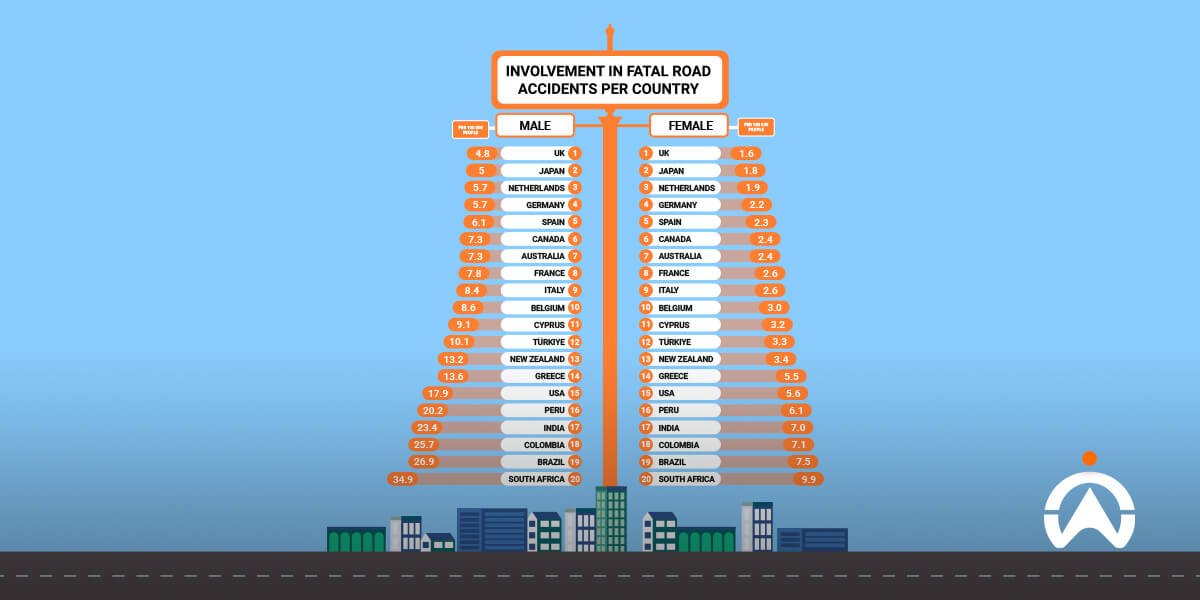
The involvement of men versus women in fatal road accidents globally

While the above data is US-based, research revealing global statistics tells the same story when it comes to fatal road-based accidents.

men_versus_women_in _fatal_road_accidents_globally

There’s always room for improvement: men’s and women’s top tips for becoming more responsible drivers

Whether you’re a male or female driver, doing some introspection on your daily driving behaviour will help you become a better driver by identifying and working on improvement points. And, because men and women are different, what can be better than providing a tailored list for each?

Men, this is how you can step it up a gear

  1. Don’t let other drivers’ irresponsible behaviour affect your focus

    Careless driving from other drivers will make anyone’s blood boil, but two wrongs won’t make a right. Keep your cool and maintain a defensive driving approach to counter the risky behaviour of others.
    ‍

  2. Avoid distractions

    Distractions come in many shapes and forms. From smoking in your car to listening to loud music or replying to a text message, you’re busy entertaining a distraction if your eyes and mind are not where they should be — the road.
    ‍

  3. Adopt and keep a growth mindset

    A growth mindset involves looking at situations from a there’s-always-something-to-learn perspective. No matter how careful you drive, never settle for thinking your driving doesn’t require any improvements.

Gals, to keep the bragging rights, consider these points

  1. Drive with confidence

    With statistics showing women as less likely to be confident about their driving abilities, it’s important to understand that a lack of confidence on the road can be dangerous. The best way to improve your driver confidence is to stay focused on the road and be ready for anything.
    ‍

  2. Avoid multitasking

    It’s something women are notoriously good at, but when weighing up the pros and cons of multitasking while driving, your safety and the safety of others should be the first priority. While women are known to take fewer risks on the road and drive carefully, multitasking remains tempting.
    ‍

  3. Don’t let emotions distract you

    Ever had to drive away after receiving bad news or having a fight with a loved one or partner? Take a moment to clear your head before hitting the road to ensure you drive with a focused mind.

men's_and_women’s_top_tips_for_becoming_more_responsible_drivers

Explore Cartrack’s expert tools for better driving

Nobody’s perfect, so having reliable tools that promote improved driving while prioritising vehicle safety is something no driver should be without.

As for gender-based driving performance, keep up the good work, ladies! It’s official: women drivers have outshone the male drivers of Mzansi. And, having more conscientious, focused drivers on the road elevates everyone’s road-based safety.

Speaking of safety, Cartrack’s SaaS-based platform is developed with drivers in mind. Here are four ways Cartrack’s revolutionary tech can help improve your safety:

  • Advanced vehicle tracking

    A car is a priceless lifeline, so make sure you protect yours. With a state-of-the-art vehicle tracking device installed in your car, backed by our 90%+ independently-audited vehicle recovery rate, you can keep your vehicle safe from hijackings and theft.
    ‍

  • Real-time crash detection

    Don’t end up stranded in the event of an accident. With smart IoT technology, we receive real-time crash notifications, allowing us to dispatch live-saving emergency responses on your behalf and notify the most important people in your life.
    ‍

  • Detailed driver behaviour reports

    Make sure you drive safely with insightful trip reports. With the touch of a button, you can review your performance on common risky driving behaviours like harsh braking, fast cornering, excessive speeding and more, helping you be more mindful of your road behaviour so you can make improvements.
    ‍

  • Peace of mind with Catrack Protector

    Stuck on the side of the road with no petrol and no one to call? Cartrack’s Protector is there for you when you’re stranded or in need of help, giving you access to roadside, legal, and medical assistance so you’ve got what you need to stay safe.

Stay on the winning side of vehicle-safety stats, contact Cartrack Kenya today to increase the safety for you, your loved ones and those around you with our industry-leading vehicle-safety solutions.