Fleet Management for Electric Cars – How to Stop Range Anxiety

Are you tired of rising fuel costs and taxes on CO2 emissions? It might just be time to pull the plug on traditional vehicles and bring your fleet to the future by going electric.

Not only do electric vehicles cut down on operational costs and boost productivity, they’re also environmentally friendly. But there’s one thing holding fleet managers back from completely integrating into a fully electric fleet — it’s a little thing called range anxiety.

In this article, you will:

  • Learn about range anxiety and how to overcome it
  • Get a breakdown of the differences between hybrid and fully electric vehicles
  • Cover potential cost savings methods for managing electric vehicles
  • Explore new advancements in EV battery technology and their impact on the future
  • Learn how to build and maintain your EV fleet with Cartrack as your trusted fleet management partner

The future of electric vehicles

Managing an electric fleet that doesn’t require fuel to run is every fleet manager’s dream, right? However, despite growing interest, a 2019 Kia Motors study found that 80% of fleet managers were held back from making the switch due to range anxiety — the fear of an EV not having enough charge to reach its destination during travel. 

Although EVs have come a long way in terms of range, it’s understandable that range anxiety remains a concern for many. But fear not, there are several measures you can take to ease any anxious feelings.

Let’s explore the facts and figures that come along with EV range anxiety and be range-assured.

The two types of electric vehicles

Electric fleets have been a trending topic recently, and we see why. These vehicles can be used in light-duty, medium/heavy-duty and even off-road applications. EVs can match or surpass their gas-fueled counterparts, plus they’re quieter.

Electric vehicles (EVs) run on batteries and electric motors rather than petrol or diesel fuel like conventional vehicles. Electric vehicles come in two main types – battery electric vehicles (BEVs) and plug-in hybrid electric vehicles (PHEVs).

BEVs are powered entirely by electricity stored in batteries, while PHEVs feature both an electric motor and a regular petrol or diesel engine. Although PHEVs have a longer range than BEVs, they still produce emissions using their internal combustion engines.

When it comes to fleet management, it’s important to consider which type of electric vehicle is the best fit for your needs. For example, if you’re looking to go green and save on fuel costs, a BEV might be the way to go, as they produce zero gas emissions.

However, if you need increased fuel efficiency and a longer range for certain tasks, a PHEV might be a better option. It’s all about finding the right balance for your fleet’s needs.
The_future_of_electric_vehicles

How do electric vehicles work?

An electric vehicle’s battery powers an electric motor, which turns the wheels to propel the car forward. When the battery is depleted, it needs to be recharged by plugging the car into an electrical outlet or charging station. The battery can be recharged using a standard household outlet, but it will take much longer than using a dedicated charging station.

One cool thing about EVs is that they can also recharge their batteries while driving. This happens when the driver applies the brakes, and the car converts the energy from slowing down into electricity to recharge the battery. This is called regenerative braking.

Overcoming range anxiety

Let’s walk through one of the major challenges of electric vehicles — range anxiety.

With all the benefits that come along with this type of vehicle, fleet managers have grown worried about whether EVs can get the job done and not die on them in the process.

Simply put, range anxiety is the fear of whether EVs have enough energy stored to cover the distance of their journey. This growing EV anxiety seems to be the number one reason most fleets have not migrated to a fully electric fleet, plus the concern that the initial transition will be too costly for some businesses.

How did range anxiety start?

The fear of EVs was sparked when its primary models, despite being fully charged, showed a low mileage range. This created a poor reputation within the transportation industry.

Charging vehicles had to be considered before the EVs could hit the road to complete daily tasks, and drivers were often finding that they couldn’t get much more than 112 km from a fully charged battery, so the question is, “How often does the fleet have to pause production just to charge?”. The irregular mileage per full battery did worse for their already poor reputation.

Naturally, no fleet manager wants to stress about rescuing stranded drivers and retrieving broken-down corporate vehicles. But when it comes down to it, if you’re thinking about going electric, should a lack of battery range be a significant concern? And what can you do to avoid it?

Improvements in EV battery technology

Since the first mode, EV batteries have been improved to last longer and charge faster. Here are the current stats on the estimated vehicle range of over 321 km on a few EVs:

Light commercial vehicles:

  1. Nissan e-NV200 – up to 275 km
  2. Renault Kangoo ZE – up to 200 km
  3. Peugeot Partner Electric – up to 275 km
  4. Citroen Berlingo Electric – up to 275 km
  5. Mercedes-Benz eVito – up to 150 km

Heavy trucks:

  1. Tesla Semi – up to 800 km
  2. Freightliner eCascadia – up to 400 km
  3. Volvo VNR Electric – up to 240 km
  4. Peterbilt 579EV – up to 320 km
  5. Kenworth K270E and K370E – up to 240 km

Factors that impact EV range

A major factor in range anxiety was the lack of charging infrastructure, but in countries that struggle with power outages and power availability, such as Kenya, unfortunately, this strengthens EV anxiety.

Apart from Kenya’s load-shedding problem, countries like America have taken initiatives to build more charging stations to meet demand and motor companies like Ford have installed over 25,000 stations as well.

Besides resource availability, other factors that impact the EV range come down to three other major categories:

Driving behaviour: With traditional fuel vehicles, negative driving habits can destroy fuel economy, the same can be said about electric vehicles. Speeding, harsh braking, and quick acceleration all consume extra energy, resulting in less range and increased vehicle wear and tear.

Weather and vehicle temperatures: Temperature is one of the most reported causes of restricted range, however, it is frequently misunderstood. Lithium-ion batteries operate poorly in low conditions, but EVs have advanced battery thermal management systems that keep them at ideal temperatures. Some energy is consumed by these systems, but most of any range loss is caused by energy used by an air conditioner to heat up or cool down the vehicle’s interior.

Longevity: Much like the batteries in our cellular devices, all rechargeable batteries eventually lose their ability to store their full energy potential, this reduction in durability is referred to as battery degradation. For an EV, this coincides with reduced range over time.

Fortunately, data shows that this decline in battery health is only 2.3% a year, simply meaning an EV with a 434 km range would have an effective range of around 363 km after about seven years.

Doesn’t data like this ease your fears about EV range? Below are additional ways to reduce range anxiety within your fleet.
Factors_that_impact_EV_range

What can be done to reduce range anxiety?

Buying electric vehicles can be a challenge, especially for businesses with range anxiety. But there are several ways you can ease this concern.

1. Providing driver training

Your drivers are the key to getting the most range out of your EVs. Improving driver behaviour by training your drivers in economic driving practices like avoiding idling, maintaining normal speeds and avoiding abrupt acceleration or stopping can lead to reduced wastage of vehicle resources and negatively impact energy economy and range.

2. Planning ahead

Optimise charging schedules to ensure EVs are job-ready at the start of every shift. Even fast-charging stations can take up to 30 minutes to fully power a standard electric vehicle, so understanding where charging stations are along scheduled routes and dedicating recharging times to assist with range anxiety is crucial. Driver training mentioned above also helps with sustaining energy by encouraging drivers to make appropriate use of regenerative braking, which sends excess vehicle energy back to your EV’s batteries while you slow down, ensuring increased EV range as they drive.

3. Keeping vehicles well maintained

A thorough preventative maintenance routine keeps fleet operating expenses low. Maintaining proper tyre pressure in the case of EVs, for example, can help you get the most mileage out of each charge. Keeping your EV’s tyres under-inflated can cause a significant decrease in mileage. Every one pound per square inch (PSI) decrease in tyre pressure leads to a 0.4% decrease in mileage. To maximise your EV’s range, it’s important to know the recommended PSI for your tyres and check them regularly, as tyre pressure can fluctuate by one PSI for every ten degrees Fahrenheit change in air temperature, therefore schedule tyre pressure inspections as the seasons change.

4. Support EV drivers with real-time data

Once drivers take their electric cars on the road, you’ll want to reassure them that they’re not alone. Monitoring vehicles’ state of charge allows managers to prevent vehicles with low charges from running out of energy. Also, fleet managers can monitor EV charge levels and update routes to point drivers to nearby charging stations in case they need to reroute or recharge unexpectedly.

Maintenance costs of an electric fleet

As a fleet manager, it’s important to consider the maintenance and cost of electric vehicles compared to traditional gasoline or diesel vehicles.

One major advantage of EVs is that they have fewer moving parts than traditional vehicles, which means less maintenance. For example, EVs don’t need oil changes, spark plug replacements, or cam belts. Instead, regular maintenance for EVs includes:

  • Brake inspections
  • Tyre rotations
  • Checking the battery’s health

Which brings down their maintenance expenses to a minimum. So, what about fuel costs? EVs are generally cheaper to fuel than traditional vehicles since electricity is typically cheaper than petrol or diesel.

Sounds good so far, right?

But, there is one setback. When it comes to the upfront cost of purchasing EVs, they can be more expensive than traditional fuel vehicles, but some factors can decrease that cost. Many European countries, like the UK and France, offer incentives such as tax credits, rebates, low-emission zones (LMZ) and free parking spots for electric vehicles. Additionally, EVs have lower operating costs than traditional vehicles because of the cheaper price of electricity compared to gasoline, and their minimal maintenance due to fewer moving parts. All these factors can offset the running price over time and make EVs more cost-effective.

ESG

Additionally, EVs obviously have lower emissions than traditional vehicles which helps fleet managers meet sustainability goals and comply with local emissions regulations.

Fleet managers may need to invest in workplace charging stations, or use public charging spots. While private charging stations can involve some upfront costs, many public charging stations offer free charging, if not, fleet managers won’t spend that much as the current cost of electricity is high for commercial customers, which is much cheaper than current Kenyan fuel prices per litre.

Charging options in EVs that ease range anxiety
Charging_options_in_EVs_that_ease_range_anxiety

Here are five recent developments in EV battery technology that fleet managers should put on their radar.

  1. Solid-State Batteries: Solid-state batteries are a promising new technology that replaces the liquid electrolyte used in traditional lithium-ion batteries with a solid electrolyte. This makes the battery safer and more stable, with a longer lifespan and higher energy density. Companies like Toyota and Solid Power are currently working on developing solid-state batteries, with some expected to be ready for use in EVs in the next few years.
  2. Silicon Anodes: Anodes are a key component of lithium-ion batteries, and recent research has shown that replacing the traditional graphite anode with one made of silicon could significantly increase energy density. Companies like Tesla, are currently working on developing silicon anodes, which could lead to EVs with longer ranges and shorter charging times.
  3. Recycling: As EV production increases, so does the need for battery recycling to reduce waste and recover valuable materials like lithium and cobalt. Many companies, including Tesla and Volkswagen, have announced plans to build recycling facilities, and new technologies like hydrometallurgy and pyrometallurgy are being developed to make the process more efficient.
  4. Battery Swapping: Battery swapping is a technology that allows drivers to exchange their depleted EV battery for a fully charged one at a charging station. This could potentially reduce charging times and increase the convenience of EV ownership.
  5. Rapid Charging: Charging times for EVs are improving rapidly, with many new models able to charge to 80% in less than 30 minutes using fast-charging technology. Companies like Ionity, which is a joint venture between BMW, Ford, Volkswagen, and Daimler, are building a network of fast-charging stations across Europe to support long-distance EV travel.

There is no doubt that the future of EVs is bright, and as technology continues to improve, we can expect to see even more impressive advancements in the years to come.

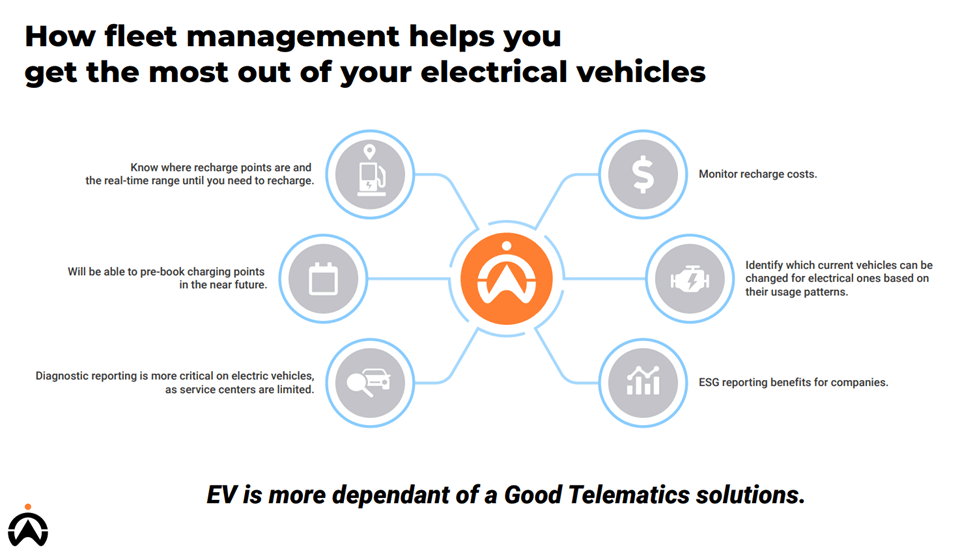
How can a fleet management system help you get the most out of your electric vehicles?
How_can_a_fleet_management_system_help_you_get_the_most_out_of_your_electric_vehicles?

Fleet management can help fleet managers by providing real-time data on vehicle performance, battery life, costs and more. Companies that provide complete fleet management solutions, like Cartrack, can help fleet managers understand vehicle insights and fully optimise their fleets.

Our battery management solution provides real-time monitoring of the battery’s state of charge and temperature, allowing you to optimise battery life and prevent unexpected downtime.

Our fleet management platform and mobile app offer predictive analytics, which uses historical data and machine learning algorithms to predict when maintenance or replacement of the battery will be needed, reducing maintenance costs and ensuring the longevity of your vehicles.

Cartrack helps you stay compliant with local regulations and ensure your fleet meets sustainability goals. We offer support by informing you of how to take advantage of incentives and subsidies for the adoption of EVs. Many countries, like the USA, provide these incentives and promote the switch from fuel to electric vehicles.

Cartrack eases your range anxiety with smart reports. These reports display your speed while charging and our detailed trip reports show the energy consumed per trip. This information keeps you constantly updated on your range status and offers comprehensive reports through our fleet system so you no longer have to feel anxious about your EV’s range capabilities.

With Cartrack, you’ll have access to all the tools and insights you need to manage your EV fleet efficiently and cost-effectively. Our personalised solutions are tailored to your specific needs, ensuring that you get the most out of your EV fleet. Experience the future of fleet management with Cartrack.

Get fleet management solutions that work

Stay ahead of the competition and get the most out of your electric vehicles with Cartrack’s easy-to-use platform.

Learn how Cartrack can help you optimise your electric fleet for cost savings and sustainability. 

Contact us today for a free quote.
Fleet Risk Management: Secrets Revealed To Make Your Fleet Thrive

Are you ready to discover the hidden ingredient that separates successful fleets from the rest? Successfully identify, assess, and mitigate potential issues in your commercial fleet that can impact your organisation’s goals and objectives with fleet risk management.

How can risk management achieve all this? Let’s get started.

In this article, you will:

  • Understand fleet risk management and how safety procedures rapidly reduce risk
  • Discover the benefits of fleet risk management, from cost reduction to driver safety
  • Explore key areas of risk management, such as insurance, compliance and technology usage
  • Identify fleet risks and how fleet managers develop strategies to overcome them
  • Find out how Cartrack’s advanced telematics and fleet management services can reduce fleet risks

What makes a fleet safe? — Risk management

You’ve probably heard of the saying “better safe than sorry”. It’s the principle behind risk management. Fleet risk management is the secret weapon companies use to ensure their drivers, other employees, and vehicles are always safe and secure.

We know life happens, so having a backup plan is important to mitigate those risks. This is where your plan B or risk management comes in. This hidden gem helps you foresee and prevent bad things from happening, like accidents, breakdowns, or theft. But effective risk management isn’t just about avoiding problems, it’s also about creating value. 

How? Well, if you own or manage a fleet of vehicles, you want to make sure they’re operating at their best and ultimately working hard for the business, right? Managers must minimise the risk of breakdowns or accidents, to avoid expensive repairs and downtime. By implementing safety policies, conducting driver training, and maintaining vehicles regularly, you’re not just reducing risk, you’re also improving performance and cutting fleet costs in the long run.

What is the role of a fleet risk manager?

The fleet risk manager plays a crucial role in overseeing and managing risks associated with operating a fleet of vehicles. They are responsible for identifying potential risks and implementing strategies to mitigate them.

Their duties may include:

  • Developing and implementing safety policies and procedures to promote driver safety and minimise the risk of accidents.
    ‍
  • Conducting driver training to improve skills and ensure compliance with safety policies and regulations.
    ‍
  • Monitoring vehicle performance and maintenance to reduce the risk of breakdowns and improve fleet efficiency.
    ‍
  • Implementing telematics technology to track driver behaviour and vehicle performance, using gathered data to identify areas for improvement.
    ‍
  • Managing insurance and claims processes to minimise financial risk.
    ‍
  • Staying updated with industry regulations and best practices to ensure compliance with the latest laws.

Fleet managers work tirelessly to protect their fleet at all times. They not only safeguard their vehicles and the business’s bottom line but also prioritise the safety of their employees. After all, the drivers are the ones behind the wheel, interacting with customers, delivering services, and moving assets from one location to another.

What_is_the_role_of_a_fleet_risk_manager

Unlock the hidden benefits of proper fleet risk management

See immediate results within your fleet with risk management. Unlike hidden secrets that take ages to reveal their benefits, risk management delivers instant advantages from the moment it’s implemented.

Reap the benefits:

1. Increased returns on investment: By keeping your fleet in top shape, you can avoid unexpected downtime and other costly issues, ultimately leading to higher returns on your investment. This can help you save money and invest in other important areas of your business.

2. Lower insurance premiums: When you manage fleet risks, you show your insurance company that you’re committed to safety. This can lead to lower insurance premiums, which can ultimately save you money.

3. Reduced business liability: If one of your drivers causes an accident, it could spell disaster for your business. By taking steps to reduce risk and improve safety, you can protect your business from legal battles and maintain a positive reputation in the market.

4. Heightened work focus: When you prioritise fleet safety, you create a culture that encourages your employees to take extra precautions with their tasks. This can help keep everyone in your organisation safer and more focused on the task at hand.

5. Less guesswork: With a risk strategy in place, you can predict and prevent potential issues before they happen. This helps you make more informed decisions leading to better outcomes for your business.

Why is fleet risk management important?

It’s reported that the risk management software market was valued at USD 27.80 billion just two years ago, in 2021, and is now projected to reach USD 86.53 billion by 2030. Many businesses are falling in line with investing in their fleet’s safety.

If you’re not yet convinced that your business needs a fleet risk manager, here are a few key aspects that could have you rethink your approach. Risk managers help:
‍

Reduce costs – By preventing accidents, vehicle downtime, and legal issues, fleet risk management can save your business money in the long run. It also helps you optimise your resources and allocate them to other priorities.

Remain compliant – Compliance with local, provincial, and federal regulations is essential for any business operating a fleet. Failing to comply with regulations can result in hefty fines and legal issues that can damage your business’s reputation and harm your budget.

Improve driver safety – Fleet risk management helps you promote a safety-first culture in your organisation, reducing the risk of accidents and injuries. This can also lead to reduced insurance premiums and a more favourable risk profile.

Improve productivity – By minimising operational interruptions, fleet risk management can improve your fleet’s performance and productivity, leading to increased savings and better resource allocation.

Why_is_fleet_risk_management_important

 Areas focused on by risk management

Fleet risk management covers a wide range of areas related to operating a fleet of vehicles. Here are five areas fleet risk management covers:

  1. Driver safety
    This involves implementing safety policies and procedures to promote driver safety and reduce the risk of accidents. This can include driver training, monitoring driver behaviour and implementing telematics technology to track driver performance with AI cameras and audible alerts.

    Monitoring drivers via telematics data can provide behavioural insights such as tailgating, late braking, or speeding. This can then be addressed through coaching safe driving and result in dramatically improving fleet and driver safety.

  2. Insurance and claims management:

    Fleet risk management includes managing insurance policies and claims processes to minimise the business’s financial risk. This can include working with insurance providers to ensure adequate coverage and managing claims processes to minimise downtime and costs.

    Fleet managers regularly review their policy terms with insurance providers to ensure the fleet’s insurance coverage is up to date, and aligned with business needs. This helps to explore opportunities for optimising coverage while minimising costs.

  3. Compliance and regulations

    One of the biggest headaches fleet managers experience is keeping up with the rules that govern commercial fleet operations and the related paperwork.

    Fleet vehicles should be fit for purpose, inspected regularly, and follow a planned maintenance schedule. All drivers should be fully trained to operate their assigned vehicles, be fully aware of the company’s safety policies and know the broader compliance regulations that it operates under. Plus, drivers should be in good health and hold a valid driving licence to drive.

  4. Fleet maintenance

    Maintenance is a vital part of fleet risk management as it directly affects driver safety and fleet efficiency. Fleet risk management involves developing and implementing maintenance schedules, monitoring vehicle performance, and conducting regular inspections.

    With fleet technology, managers can efficiently maintain their vehicles by monitoring engine data, tyre pressure and braking systems, this ensures optimal fleet performance and increases vehicle longevity.

  5. Asset management:

    Fleet risk management involves managing fleet assets, including vehicles, equipment, and facilities. This can include developing asset management plans, monitoring asset performance, and implementing strategies to reduce asset loss or damage.

    Take a construction company for example, managers oversee a fleet of excavators, bulldozers, loaders etc and can accurately track the usage of each piece of equipment, and identify unusual idle times or underutilised assets.

  6. Telematics and GPS technology:

    The use of telematics and technology can help fleet managers identify potential risks, monitor driver behaviour, and improve overall fleet performance. This includes GPS tracking, driver scorecards, and real-time monitoring of vehicle data.

    Fleet managers can use this type of technology to improve equipment visibility, seeing the real-time location of their assets without depending on their drivers to inform them of their whereabouts. 

Daily fleet risks

In the world of mitigating risks, every day brings its own set of challenges. From unexpected accidents to rising fuel costs, being aware of these day-to-day risks is the first step towards developing strategies that can overcome these challenges.

Here are some potential fleet risks you can encounter:

  • Vehicle collisions and other accidents
  • Costly vehicle repairs
  • Driver and motorist injuries and fatalities
  • Legal, medical, and other liabilities
  • Property and asset damage
  • Fines and other penalties for violating regulations
  • Vehicle theft and highway robberies
  • Vehicles getting caught on fire (e.g., when carrying highly flammable items)
  • Cargo loss and damage
  • Theft and vandalism
  • Insurance and liability

This long list still doesn’t cover the full extent that fleet risk managers have to oversee and control. Depending on specific industries such as food and pharmaceuticals, risk managers are faced with unique elements they have to take care of to ensure everything runs smoothly daily. 

Luckily, fleet management systems are equipped to help.

Daily_fleet_risks

How fleet management systems keep risks under control

Advanced technology such as Cartrack’s smart telematics has given fleets the ability to leverage millions of data points to make better decisions in risk management. Managers can employ a variety of telematics to lower risk and make operations safer and more efficient.

Fleet management can be an effective solution to keeping fleet risks under control for several reasons:

Telematics: Telematics technology uses GPS tracking and other sensors to collect data on vehicle performance, driver behaviour, and other key metrics. Fleet managers can use this data to identify areas of risk, such as speeding or aggressive driving, and implement strategies to improve driver behaviour and reduce accidents.

Data-driven decision-making: Fleet management relies on data to make informed decisions about risk management. By collecting and analysing data on driver behaviour, vehicle performance, and other key metrics, fleet managers can identify areas of risk and develop targeted solutions to address them, as well as track improvements over time.

Proactive approach: Fleet management takes a proactive approach to risk management, which means that potential issues are identified and addressed before they become major problems. By implementing preventive maintenance programs, driver safety training, and other proactive measures, fleet managers can reduce the likelihood of accidents and breakdowns.

‍Compliance: Fleet management solutions can help fleet managers ensure compliance with regulatory requirements related to vehicle safety and maintenance. By staying up-to-date with the latest regulations and implementing strategies to meet these requirements, fleet managers can reduce the risk of fines, penalties, and other legal issues.Additional devices include:

Additional devices include:

  • GPS tracking devices offer real-time location tracking and other vehicle data on both powered and non-powered assets. They also support better route decisions based on the latest road, weather and traffic condition information
    ‍
  • ELDs (Electronic Logging Devices) give fleets the ability to collect and transmit reports that are needed to meet compliance mandates
    ‍
  • Dash cams offer real-time images/footage of what is happening both inside and outside a vehicle
    ‍
  • Fuel cards give managers control over when and where fuel is purchased and by which driver
How_fleet_management_systems_keep_risks_under_control

The ultimate secret revealed: Cartrack fleet technology

With the ever-increasing number of vehicles on the roads, fleet risk management has become more difficult to manage. 

Cartrack provides technology and services designed to help fleet managers ease through this process with their fleet solutions.

Real-time monitoring: With installed tracking units and Cartrack’s fleet management platform, vehicle tracking technology allows fleet managers to stay connected to their fleet at all times with accurate vehicle location and instant notifications. Cartrack also offers a Geofence feature that allows you to set virtual boundaries around areas and receive real-time alerts whenever your vehicle enters or exits these areas.

Driver behaviour analysis: Cartrack’s technology also includes driver behaviour analysis through driver scorecard reports that indicate unsafe driving behaviours like harsh speeding, braking and turning, and AI cameras with in-cabin audio alerts that go off when drivers show signs of fatigue or distraction. This can help fleet managers provide targeted training and coaching to those unfocused drivers, ultimately improving driver safety and reducing the risk of accidents.

Maintenance tracking: Cartrack’s fleet management system keeps track of each vehicle’s mileage, engine hours, and time intervals between services to help ensure that vehicles are properly maintained and serviced on schedule. Managers are informed of the on-coming vehicle service through auto-generated reminders when a vehicle reaches its maintenance threshold. This can reduce the risk of breakdowns and other issues leading to downtime.

Accident management: In the event of an accident, Cartrack’s telematics technology can detect sudden impacts or collisions and instantly send a notification of the event to fleet managers while their tracking units further help by quickly locating the vehicle and prompting a quick response to send emergency personnel to the incident. This can help save the driver’s life and reduce the risk of damage to other motorists and your vehicle.

Remain compliant: Easily manage and automate your regulatory compliance throughout your operations with these Cartrack tools:

  • Time tracking: This enables tracking of driver work and break times, preventing vehicle operation if the driver doesn’t take their full break time, ensuring drivers get the necessary rest periods.
  • Automated compliance management: Automate regulatory compliance and track fleet requirements such as insurance, permits, and contracts through Cartrack reminders.
  • Real-time risk alerts: Prevent violations with Cartrack’s fleet compliance software that provides real-time alerts about compliance or operational risks and prevents unauthorised vehicle or machinery usage until the risk is handled.

Specialised sensors: Cartrack offers a range of specialised sensors that cater to diverse industries. With sensors such as CANBus vehicle diagnostics, cargo door monitoring, temperature monitoring, and seat pressure sensors, Cartrack empowers various industries like transportation, logistics, construction, security and perishable goods to enhance efficiency, security, and safety.

All these smart features and services from Catrack, help fleet managers become more vigilant to potential risky events and alleviate or at least lessen their daily stresses with top-notch fleet management solutions that can help identify and mitigate risks and keep their fleets running safely and efficiently.

A fleet management company that can reduce fleet risks

Looking for a reliable solution to help manage and mitigate fleet risk? Cartrack offers a comprehensive suite of telematics and fleet management services that can help keep your vehicles, drivers, and assets safe and secure.

Contact us today to learn more about how we can help your business! 

How to stop vehicle idling and save fuel and business costs

Is idling bad for your car? It sure is. Now imagine if you have an entire fleet idling, it surely will put a dent in your business’s bottom line – and quickly too.


In this article:

  • The meaning of idling a car and how exactly does an engine idle
  • Five reasons why you should stop idling and the benefits of it
  • Important steps you can take to stop idling in your fleet
  • How to save on running your fleet with Cartrack

Whether drivers leave the engine running while unloading deliveries, stuck in traffic, taking a roadside phone call, warming up the interior in the winter months or cooling it down in the summer, every second of idling costs.

This is how idling vehicles in your fleet costs you, and we’ll give you ways to cut down on idling and save.

What is vehicle idling?

Idling is when a driver leaves the vehicle engine running when the vehicle is parked. Every day millions of cars and trucks idle unnecessarily, which can have many implications. 

What is an example of idling? 

This could be in stop-and-go traffic, drive-through lines, or loading docks. As well as running the vehicle to power heating, air conditioning, and electronic devices. 

If you are a fleet manager, with multiple drivers and vehicles, you’ll want to keep tabs if they are keeping your vehicles on for aircon, offloading while the engine is on, or idling too much in traffic.

So, what is the problem with idling? 

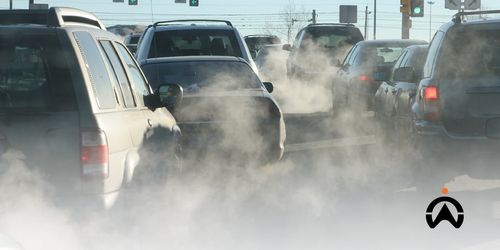
Idling for more than 10 seconds uses more fuel and produces more emissions, contributing more to smog and climate change than stopping and restarting your engine does. Idling also contributes massively to the general wear and tear of a vehicle, a lot more than you’d imagine. 

Let’s dive into this a bit more. 

What is vehicle idling?

How does an engine idle?

On a modern fuel-injected engine, the engine idle is controlled by the engine control unit (ECU) and electrically operated by a simple throttle stop, known as an idle screw. This screw stops the throttle linkage arm from completely shutting the butterfly valve that allows air to enter.

The throttle stop allows the butterfly valve to sit slightly open, which will then let a minimum amount of airflow reach the combustion chamber. This opening is just enough to allow a specific amount of airflow through to keep the engine running when there is no physical throttle input from the gas pedal. 

Then there’s the idle air control valve or IAC valve, which uses sensors that communicate with the ECU to adjust airflow into the engine to achieve the desired engine speed at idle.

This is something to look at next time you think of warming up the engine. 

5 reasons to stop your car from idling

  1.  Less wear and tear on parts

An hour of idling daily adds up to around 102 998 km of engine wear over a year. And that’s just for one vehicle.

According to the American Trucking Association, such wear can increase maintenance costs by almost $2,000 per year and shorten the life of the engine.

The reason is that excessive idling puts a huge amount of stress on your car’s parts. An engine running at idling speed causes twice the wear on internal parts compared to driving at regular speeds.

How does idling harm vehicle engines and systems? 

Idling can cause fuel to wash away the oil which lubricates the motor, causing friction that ages the engine prematurely. Modern engines have fuel consumption regulating sensors, and idling doesn’t warm the engine well enough to enable the sensors to respond, as the fuel-to-air ratio is too rich. Partially combusted fuel can damage engines, spark plugs, and exhaust systems.

A software platform provides driver scorecards that can help increase your vehicles’ lifespan, by decreasing bad driving habits like idling, reducing accidents, and boosting your operational efficiencies. This fuels smart business overall. 

No matter the size of the vehicles in your fleet– parts and maintenance aren’t cheap. You could be using money spent on repeated repairs elsewhere, to grow your business and expand your resources.

  1. Limit health risks

Idling creates the same amount of pollution as when the car is moving. These pollutants have been linked to negative health implications and diseases including asthma, heart disease, chronic bronchitis, and cancer. 

Some studies have even reported that acute exposures have resulted in hospitalisation due to respiratory conditions while cardiovascular health conditions result from chronic exposures to pollution. 

In addition, when sitting in an idling vehicle, there is no air flow to vent the emissions. Therefore, fleet managers should also take measures to stop idling for their drivers’ health, as they will be exposed to vehicle pollution more so than when the vehicle is moving. 

  1. Protect the environment

According to a recent Convoy survey, reducing carbon emissions remains a critical concern. In 2022, 38% of dispatchers, drivers, and owner-operators feel pressure to reduce carbon emissions in their businesses — a 3% increase from 2021. 

Research by the U.S. Environmental Protection Agency found that transportation produces 29% of U.S. greenhouse gas emissions, the highest of any sector. 

For every 10 minutes your engine is off, you’ll prevent one pound of carbon dioxide from being released (carbon dioxide is the primary contributor to global warming). One wasted litre of combusted diesel fuel throws 2,64kg of CO2 into the atmosphere. 

  1. Save on fuel costs

An idling car uses between 0.76 to 2.65 litres of fuel an hour. An idling diesel truck burns approximately 4 litres of fuel an hour. With Kenya prices for unleaded fuel topping Kshs 171 a litre at a point this year, that can be up Kshs 684 wasted in an hour an hour. 

One of the most impactful ways for trucking companies to create sustainability is by using less fuel. Taking measures to drive fewer miles and reduce idling is a way to reduce fuel consumption idling, and thus save on costs. 

Cartrack’s smart dashboard on the software platform shows you how much fuel your fleet uses for unproductive idling. 

  1. Cut business costs 

As mentioned, idling increases maintenance costs for general wear and tear, as well as additional fuel expenditure.

This will have a direct impact on your bottom line, and overall business profits. 

5 reasons to stop your car from idling

 4 ways to reduce vehicle idling with a fleet platform

  1. Driver behaviour reports 

A fleet management platform provides data reports about driver behaviour such as idling, rough driving, speeding, braking, and cornering. If excessive idling is identified, then fleet managers can implement actions to stop this from happening.  

The software reports can also show you which drivers are idling longer than others, so you can notify these drivers accordingly. 

  1. Educate and motivate your drivers

Some people believe restarting the vehicle burns more fuel than leaving it idling, and your drivers could be among them.  According to the Environmental Defense Fund, idling for 10 seconds wastes more fuel than restarting the engine. 

Debunking these beliefs will encourage your drivers to switch off their engines whenever the vehicle is stationary for more than 10 seconds. When it comes to fleet management, standard operating procedures for engine idling must be part of a training programme and safety culture. 

Fleet managers should teach drivers about engine idling impacts, and how to avoid idling– to help build best practices at the onset. Ultimately, it will motivate and empower them to improve their driving.

  1. Optimised routes 

By analysing the data provided, you can track where the most idling is taking place and why, and optimise your routes to prevent this.

Traffic congestion is another main cause of increased idle time.  You can use telematics software to optimise your drivers’ travel routes to avoid heavy traffic where possible, thus reducing idling. 

Cartrack Delivery’s route optimisation feature uses GPS and algorithms to evaluate all the possible routes for drivers to take. The telematics software assesses multiple variables when determining the best routes, including current traffic, accidents, and roadblocks.  Drivers can adjust their routes in progress or before they start their trips. 

  1. Geofencing

You can use geofencing to reduce the time your truck idles, by putting a geofence around common idling areas. When one of your vehicles enters the geofenced area, the telematics software will send you an alert to show how long the vehicle remains in the area.

 Idling on a construction site as an example

It is common for heavy-duty equipment on construction sites to spend significantly long periods with the engine idling, due to the nature of the work– and more than necessary. In these cases, idling should be monitored with the help of idling insights from a fleet platform. Fuel is one of the largest expenses for heavy equipment and vehicles in the construction industry, which is more of a reason for it to be kept under control.

Idling on a construction site as an example

 Save on the fuel and running of your fleet today

Idling can be an expensive problem for your business, but there’s a simple fix. While making drivers aware of more cost-effective habits goes a long way, our GPS and fleet vehicle tracking software can help limit idling.

What’s more? A customisable software dashboard helps you easily monitor other key metrics that matter to your business. Improve your fuel consumption, idle rates, driver safety, fleet running costs, productivity, vehicle usage, and more.

Contact Cartrack today to find out how our expert fleet management solutions can help, as well as the latest fleet technology trends.

How trailer tracking technology helps you manage, monitor and protect your trailers

Trailer tracking is just one of the many tools used to help make a manager’s life easier. With it, you can efficiently monitor and gain access to your assets from anywhere through our cloud-based solution.


In this article:

  • Gain insight into how asset and trailer tracking help minimise product damage, misuse and theft
  • Know what to look for when choosing a tracking unit that’s right for your assets
  • Learn how to use GPS technology like telematics to achieve total asset protection and monitoring
  • Use Cartrack to monitor, track and secure all your trailer assets no matter the size of the business

It wasn’t that long ago that employees had to go out of their way to get information. Taking time to write down the trailer number, note the location, and record any onboard cargo leaves you with less time to actually use your assets.

When trailers were on the road, manual counting was more challenging and often required a phone call, or two, for the fleet manager to get an exact location. If a trailer went missing during transit or was stolen days could pass before the company found out.

Trailer tracking technology changed all that.

Telematics and asset monitoring for trailers

Although many businesses use GPS trackers for better trailer management, many don’t know the full extent and potential of these little gadgets, i.e a GPS device, in fleet telematics.

Telematics is the smart technology used through a GPS tracking device installed in their vehicles. It gathers and stores all vehicle and trailer data and compiles it for easy management and access through a fleet platform.

Like many fleet technologies, telematics is mainly used for tracking assets like vehicles, trailers, generators, IT devices and expensive equipment. This is used for damage prevention, asset protection and overall asset tracking within the fleet.

What is a trailer tracking device and how does it work?

With GPS technology advancing faster than many people imagined, we are only beginning to realise the true value that it adds to the transportation and logistics industry. One of the most promising uses of this technology is in asset protection through trailer GPS tracking.

There are two parts to the commercial trailer tracking systems.

Battery or solar-powered – A trailer tracking device is attached to the trailer itself which emits a GPS tracking signal that communicates through the use of a cell modem. This allows the user to find out where the trailer is at any given moment.

The software – This is what receives the signals sent by the tracking device. The software can translate the signal from the trailer tracker and put the information onto a map, showing the exact location, whether the trailer is stationary or moving, and in some cases, whether or not it is tethered to a vehicle.

What is a trailer tracking device and how does it work?

Why track your assets?

Businesses invest in many things to generate profits, like their employees, vehicles and overall trailer assets. Physical assets could include any equipment, technology, or machinery that an entity uses to provide a service to themselves or their customers. All these different types of vehicles and site equipment are valuable for the business and need to be protected.

Asset tracking is used to track a business’s assets. It gathers any GPS data related to them, such as their current location, maintenance conditions, when last it was in use, for how long and by whom. This is achieved by equipping the assets with a tracking device.

Asset tracking is useful for: 

  • 24/7 trailer surveillance
  • Movements of the asset
  • Usage of the asset

Apart from your trailer’s protection, asset and trailer tracking is used for productivity and easy management, having a tracking device automatically tells you how long one of your trailers has been used in a day, and by who saves loads of time in calculating, it also helps add up working hours so you can bill clients or pay employees more accurately.

The real-time vision of their trailers gives fleet managers insights into their assets whether on-site or on the road. Using fleet trailer tracking units and software not only makes their job simpler but can also boost the organisation’s bottom line.

Asset tracking devices for theft prevention

So it happened, you clock in one morning, open your emails and read that one of your trailers was damaged or stolen while unattended. Now what? Most of the time, criminals would strip the trailer and remove the trailer’s vehicle identification number (VIN) before you even notice your assets are gone.

This happens all too frequently, costing businesses time and money. Every company that uses trailers understands these struggles. The dangers of leaving your assets unguarded, the area where they are left alone, the chance of the item getting stolen or used without our consent, and the list goes on.

With a trailer tracker, you will immediately know that something has gone wrong. An alert would be immediately sent out, giving you enough time to call the authorities and find your missing trailer, and you can receive all this info via your mobile device. 

Types of trailers that can be tracked

Realistically, GPS trackers can be installed onto any moving vehicles and stationary assets. Cartrack’s tracking units can be easily installed on all types of trailers, and vehicles in use, including:

  • Flatbed trailers
  • Enclosed trailers
  • Equipment trailers
  • Open auto trailers
  • Speciality trailers

While any GPS fleet tracking device would do, partnering with an industry-leading fleet management company like Cartrack would give you numerous benefits and added peace of mind.  

Asset tracking technology

While GPS tracking is the most popular tracking method, there is more than one way of tracking assets. Finding the best asset monitoring solution for your company might be difficult given the variety of asset tracking technology available.

Bluetooth asset tracking/ Beacons: These are remote gadgets that transmit Bluetooth low-energy signals sent to another Bluetooth digital gadget or smart device to establish the location of the beacon itself. 

Radio frequency identification: Passive RFID asset tracking is a form of wireless communication that uses electronic fields to identify and track tags attached to objects. These require RFID reader devices to receive signals from the tag.

GPS-based asset tracking: GPS tracking devices are attached to any assets and can interact via cellular networks or satellites and communicate over long distances while keeping accurate, up-to-date logs for employees.

Most types of mobile asset tracking devices allow for custom alerts, notifications and even geofence set-ups for the safety and protection of your assets.

The best GPS tracking features to look out for

Before choosing an asset tracking solution, always consider your goals and ask yourself: What exactly is my business looking for and what features do we need the most?

The best tracking devices are ones that have the following features:

  • 24/7 real-time location tracking
  • Cloud-based system
  • Theft detection
  • Easy installation
  • Long battery life
  • Solar-powered technology
  • Instant reporting
  • Over-the-air serviceability
  • Interface with user-friendly mapping systems such as Google Maps or others
  • Viewing trailer trip history

Finding one device that offers all these features would be a dream, but realistically most devices are not one-size-fits-all, these features are spread out between devices that are used to track different assets in different environments. 

The best GPS tracking features to look out for

Why does GPS asset tracking matter?

GPS asset tracking is done to improve the use and security of valuable items, in this case, your trailers and the cargo they carry. Companies that fail to track assets correctly could be losing vast sums of money on an annual basis and losing the trust of their customers.

Trailer (and asset) management is an essential component of your business’s supply chain operations. Lost or delayed cargo means lost sales and unhappy customers, which can be detrimental to a business. 

Management may have a better and clearer image of where everything is, and where it is going, by connecting trailer tracking devices and their fleet management system.

By doing this, you can receive:

  • Lowered insurance rates due to aiding in trailer theft recovery
  • Software upgrades can be done digitally and don’t need the removal of the tracking device
  • Optimised asset usage
  • Increased asset and cargo security
  • Improved customer service with accurate and timely information
  • A sealed trailer tracker that can work in harsh weather and road conditions.

Different businesses that can utilise trailer tracking devices

If your assets aren’t frequently monitored, operate in unsafe locations, aren’t being utilised enough or bring value to your business, implementing trailer monitoring would be very beneficial.

No matter the fleet size, almost all industries can benefit from tracking and monitoring their trailers.

  • Landscaping
  • Construction
  • Handyman
  • Tile and flooring installation
  • AC & heating repairs
  • Transport and logistics
  • Utilities

 The benefits trailer tracking can bring your business

A fleet of any size can profit greatly from using a dependable trailer tracking system. With this, you can safeguard your trailers, get visibility and insights into their movements, and much more:

Gain complete trailer visibility – Track all your van trailers on one platform.

Increased trailer utilisation – Monitor trailer utilisation at customer sites and optimise trailers by redeploying under-utilised assets.

Protect cargo – Use smart sensors and camera systems to gain 24-hour cargo monitoring and protection against tampering or unscheduled usage.

Simplify deployment – Trailer tracking can be used on any trailer to keep assets safe.

Increase productivity – Examine past GPS data to see where you can improve trailer efficiency and usage.

Increased trailer safety – Receive instant alerts on trailer status, location, door activity and unauthorised usage for optimum security.

Trailer tracking systems use the data sent to the dispatcher to provide dependable and secure insights to shippers for better management of their various assets.

Secure trailer tracking with industry experts

Cartrack’s GPS trailer tracking technology puts you in control of both your active trailers and non-moving assets.

If you’re looking for advanced safety and tracking features, Cartrack provides real-time security with customisable geofences and alerts for your assets.

Let us help you protect your assets. Contact Cartrack today.

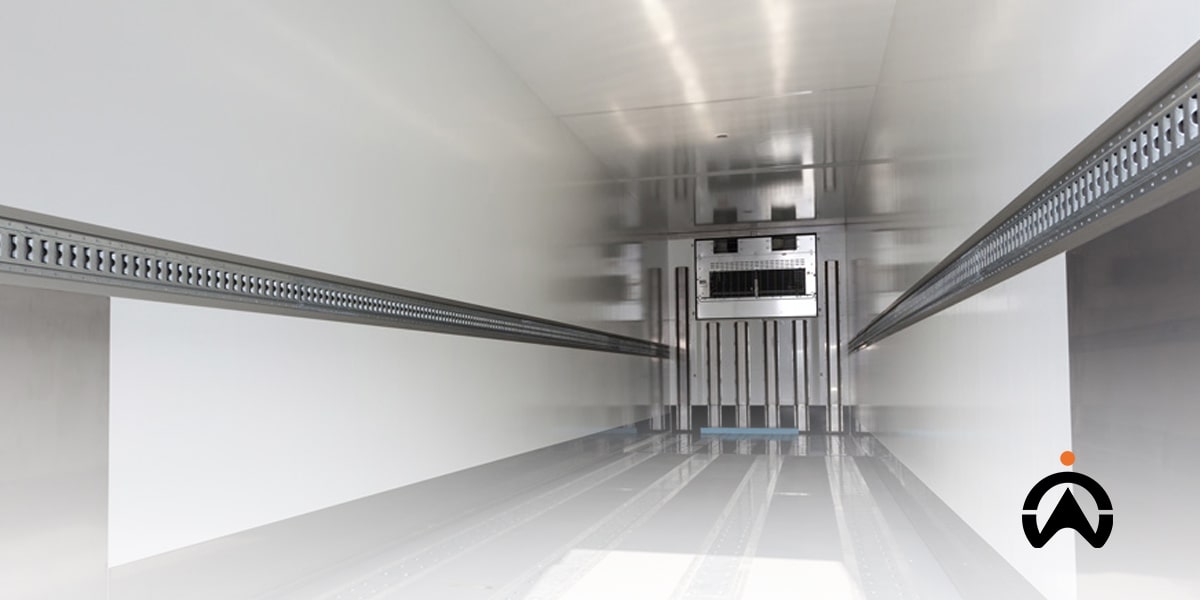
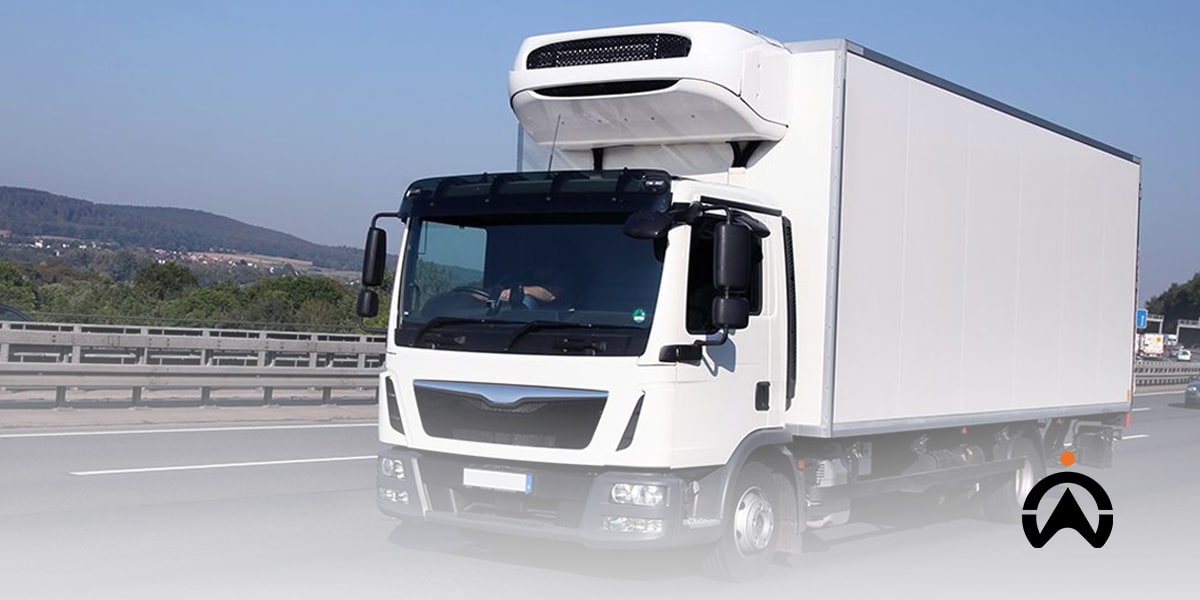
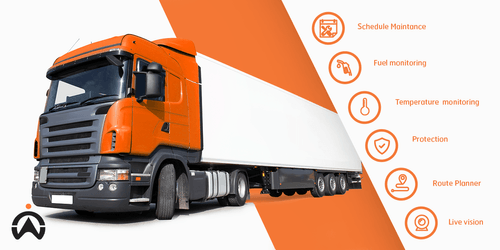
Why does your fleet need to monitor frozen goods with Cartrack’s temperature monitoring system?

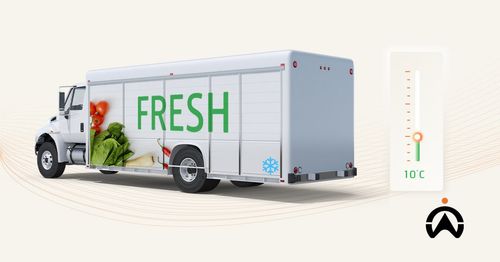
Don’t let the outside environment influence the quality of your product. Get a temperature monitoring system and control the temperature of your cargo area as well as your products.


In this article:

  • Learn how temperature monitoring sensors help temperature monitoring systems minimise product damage.
  • Know what to look for when choosing a monitoring system for your business.
  • Gain insights into how temperature monitoring systems can solve your business’s logistics issues.
  • Find out what Cartrack’s temperature monitoring solution can do for your company.

‍

If you are a part of the food, beverage, medical or pharmaceutical industry, you know having the right temperature is the key to safeguarding your products against the outside environment. Temperature monitoring systems can be easily tailored to fit every industry and provide the right temperatures every time.

There are numerous remote temperature monitoring systems on the market that might be more suitable for one industry than the other. Read on to find the right one that will benefit both your business and your products.
‍

What is a temperature monitoring solution?

In countries prone to extremely high weather temperatures, such as African and Asian regions, using a temperature monitoring system while storing or transporting your products is often the only method to sustain product quality.

Almost 20% of perishable products are damaged each year because of poor cold chain practices, resulting in billions of dollars in losses. This system strives to decrease product damage by efficiently controlling and monitoring the temperature of any cargo environment. It constantly maintains the quality of the transported or stored products by providing constant low temperatures suitable for the products.

The food industry is not the only entity that frequently uses this technology. Numerous businesses specifically need cold temperatures to thrive, such as: 

  • Healthcare
  • Hospitals
  • Clinics
  • Science organisations

This technology is a must-have throughout the supply chain, especially for cold-chain logistics businesses in the perishable goods industry.

Cold chain logistics

When implementing temperature monitoring, you are likely to also use cold chain logistics. This takes the practice of preserving products one step further.

This offers a variety of cold storage and cold transportation options, specially manufactured to provide a controlled cold environment for products. Cold chain logistics also offers cold technologies that can be used even when you don’t have cold storage or a vehicle fully equipped to transport cold chain products.

To keep temperature-sensitive products at their preferred temperature throughout transit, you’ll need:

  • Gel packs
  • Dry ice
  • Liquid nitrogen
  • Reefer (refrigerated container)
Reefer (refrigerated container)

How does a temperature measurement device monitor?

Finding out how a temperature monitoring device works can be overwhelming. There are many moving parts all working together to get this system up and running.

Usually, a remote temperature monitoring system has six common temperature sensors that each play their part and contribute greatly to the system.

1.      Temperature sensor or probe

A temperature sensor is what allows the temperature monitoring system to track environmental temperatures and detect any changes in degree, while a system temperature probe converts signal levels, changes impedance levels and provides easy connection methods.

Measuring temperature is the whole point of the sensor. Without it, the system wouldn’t be able to work. These are the three most common temperature sensors you’ll find: 

Thermocouples: These are the most affordable and common temperature sensors. If you don’t mind extreme high-temperature data accuracy, a simple-to-use sensor and a cost-effective solution, this is the right sensor for you.

RTD sensors: They have a higher accuracy percentage than thermocouples and offer more accurate readings. This is ideal for freezers and refrigerators as the sensors’ temperature range is limited.

Thermistors: Similar to RTD sensors, thermistors have a limited temperature range, but they are more resistant to non-linear thermocouples fluctuating. For this sensor to work, it has to be paired with a system that supports the non-linear resistance curse.

2.      Thermal buffers

A material or liquid is used to buffer response time in temperature sensors. They aid monitoring systems in accurately measuring product or ambient temperatures.

A sensor with a lower reaction time will be able to detect slight temperature changes in a short period and alert necessary personnel to the switch.

Examples of thermal buffers include:

  • Glycol bottles, 
  • Nylon blocks
  • Vials filled with glass beads

3.      TMD (temperature measurement device)

Every modern-day system has that one critical element and a temperature monitoring system is exactly that. (TMD) is responsible for doing the following tasks:

  • Connects to sensors for digitising the temperature value
  • Records temperature data
  • Temporarily stores data before transmission to the storage destination

This works with three types of temperature measurement devices:

  • Standalone temperature measurement device – this standalone temperature monitoring is an all-in-one independent device that doesn’t need a helper device to record or process temperatures.
  • Networked temperature measurement device – this needs to be connected to a PC, server, or cloud via a LAN or wi-fi to send through and receive data.
  • Wireless temperature monitoring – this is a popular option that needs a little more technology to run. It includes a wider wireless monitoring system range and a higher data update rate. Ideal if you have multiple fixed points, like stationary freezers or refrigerators, that require automatic data collection and live alerts.
4.      Data storage

Any system used to collect and send data needs a big place to store all that information. Depending on your business, you might need to store temperature data frequently, or even once a week.

Data storage options for temperature monitoring systems include:

Local memory storage: Simply use any USB stick or memory card you have to store data. Unfortunately, this is only suitable for small businesses as USB sticks and memory cards are easy to lose and don’t usually have large storage space.

Local gateway: This can connect to and use a cellular network for the temporary collection and storage of data. The data is later transmitted to a larger storage device like a local PC.

Cloud solutions: These automatically transfer data to servers and additionally offer a wide variety of features to managers. Connected cloud-based solutions, like Cartrack, are becoming increasingly popular in temperature monitoring systems and are being implemented more with each passing year. 

5.      Alarms

One of a temperature monitoring system’s most important components is the alarm. An alarm makes sure that every threat or warning is effectively communicated, through various communication channels such as email, SMS, and fleet platforms.

Your temperature monitoring system’s alarm settings must be customised for your company.

6.     Software

After the monitoring has done its part and gathered information, the software is needed to decide what you do with the data, whether you choose to chart it, archive it or simply categorise it. Software is needed to run and control the operations of the entire system. 

Software is needed for:

  • Configuration
  • Charting
  • Alarm management 
  • Data retrieval 
  • Reporting 

What is a continuous temperature monitoring system?

This is a powerful system that can weather any storm, from power outages to internet outages. It will continue to have 24/7 monitoring of products.

For a South African business that suffers through load-shedding almost daily, using technology to monitor the temperature of your products might not always work out when the power goes off. 

To combat this, many businesses have had to find alternative means to maintain a constant temperature, continuous temperature monitoring is one of those options.

How does this monitoring system work?

Continuous temperature monitoring equipment has internal batteries that provide just enough power to keep the system running regardless of weather conditions.

While the power is out, the system can:

  • Record temperature readings without interruption
  • Capture necessary data that is critical to the operation

Having a generator might help in these situations, but even when the generator turns on, it sometimes doesn’t bring back the internet or phone network, which can hinder temperature readings by not transmitting the data.

Without an internet connection, a cloud-based platform such as Cartrack will recognise the break in communication from the temperature sensor and see that transmissions are not being received, which will notify personnel of the disconnect.

This system is often used in labs, museums or construction sites.

How does this monitoring system work?

How to find the best temperature monitoring and control system

Like many temperature sensors in use, the best one is always the one that suits and caters to the business’s needs. Every added feature works differently and brings its strengths and weaknesses. Finding the right one for your business solely depends on how you intend on using this system and the type of products you specialise in.

Features temperature monitoring needs:

1.      Accuracy

What good is a temperature monitoring system that doesn’t give you accurate temperature readings? Accuracy is important for both gathering and sharing temperature data. If the readings are off, alarms won’t work and products would spoil without the manager being aware.

2.      Long battery life

A system that provides 24/7 monitoring and has a battery life that lasts over a year is preferable. After you have this, testing the system is important. Knowing exactly how long the battery lasts is the difference between being prepared and scheduling a new battery to continue monitoring or clocking in the next day, and finding a dead system along with damaged products.

Most temperature-sensitive products need to be at a certain temperature constantly, a change in degree can mean the manufacturer suffers a loss in products and won’t profit. So, long battery life is pretty important.

3.      Large storage

Most temperature systems are used in shipments, warehouses or storage containers over a long period. Temperature monitoring systems often have months and months of backlog piled up. Most businesses look for storage big enough to handle the capacity.

If the storage and temperature monitoring system are not up to the task, data leaks might occur, leaving chunks of data missing and no way of knowing if your products are still in pristine condition.

4.      Wireless data transfer

This is the ultimate form of transferring data if your business uses a cloud-based data storage system. Either than other systems, monitoring systems’ wireless data transfer allows immediate access to data without interfering with the temperature system. Reducing the use of physical paper in the long run as all information is already gathered and stored. 

How to find the best temperature monitoring and control system

What can a temperature monitoring system do for your business?

Your business can easily track, control and regulate the products and assets’ temperature in any specific environment with a good temperature monitoring system. This will ensure that the business and customers are satisfied with the product and your services.

Here are some essential components that benefit the business:

Automatic alerts
You will automatically be notified of events that impact your products, like high and low-temperature changes.  With this, you can determine if your product has experienced fluctuating temperatures and to what degree.

Temperature notifications
The monitoring system will be notified if there is the slightest temperature change and will instantly alert managers. The faster you are notified, the faster you can come up with a solution.

Reports
This will be generated automatically by the temperature monitoring system so you can see trends and analyse the patterns. Giving you the bigger picture of what’s happening within your warehouse, vehicle or storage area.

Temperature tracking
Get product updates and current temperature measurements without manually checking in. A temperature monitoring system will do all that for you, allowing for easier monitoring.

Customised indicators
Create specific temperatures for minimum and maximum thresholds based on the kind of product or container being monitored by the system.

Complete temperature monitoring solution

Looking for a smart fleet system that will not only drastically decrease the chances of product spoilage or damage but also automatically regulate temperatures and keep managers in the loop?

Cartrack offers solutions that allow credible insights into your warehouses without having to leave the comfort of your office.

Interested? Contact us today.

How fleet managers can improve employee productivity and increase efficiency with actionable insights

Have you ever wondered how fleet businesses keep their operations running smoothly, productively, and profitably?


In this article:

  • Understand what fleet management is and what processes it entails
  • Find out what exactly a fleet manager does and the day-to-day tasks they face
  • Learn about fleet management software and how it benefits the management process
  • Discover how actionable insights from Cartrack’s technology can improve employee productivity

From dispatch to delivery, operation costs to business profits, there is a lot of work involved in fleet management. Behind every productive and successful business is an efficient fleet manager with the best fleet management software.

‍Firstly, what is fleet management?

The term fleet management refers to the management and supervision of vehicles such as cars, trucks, or vans that are used for business purposes. Fleet management does not only refer to a single task but a process involved in overseeing the entire fleet operation, from employee performance to fleet performance.  

The fleet management process includes:

  • Managing fleet vehicles
  • Tracking task completion rates 
  • Improving driver safety and productivity
  • Ensuring vehicle maintenance
  • Analysing fuel costs and managing fuel consumption
  • Optimising routes for on-time deliveries 
  • Using actionable insights to make strategic decisions 

All these tasks are undertaken to increase employee productivity, ensure fleet operations run smoothly, improve customer experience and increase profits while reducing operational costs and time wastage. 

To better understand fleet management, let’s take Bill as an example. Bill is a fleet manager for a small fleet business in the health industry.
‍

What is a fleet manager and what do they do?

As a fleet manager Bill is responsible for all aspects of the fleet business, this includes directing and managing fleet vehicles, resources, and costs. This role requires efficient use of time, and excellent leadership and decision-making skills to effectively oversee fleet assets and increase fleet performance. Even though Bill’s daily routine may differ slightly from that of other fleet managers who work in different fleet industries, they all share common responsibilities which include:

  • Managing, overseeing, and supervising fleet operations
  • Hiring quality drivers and monitoring driver behaviour and performance
  • Creating and managing driver tasks and schedules to maximise productivity
  • Ensuring the fleet remains compliant and avoids unnecessary setbacks
  • Implementing fleet management strategies to reduce fleet costs and increase productivity
  • Creating and using detailed reports
  • Organising paperwork and administration 
  • Ensuring regular vehicle maintenance for operational efficiency and minimising downtime
  • Meeting customer expectations and ensuring a high level of customer satisfaction 

It’s challenging for Bill and other fleet managers to efficiently manage their fleet’s daily tasks while boosting profits. Therefore, they use fleet management software to help them manage small, medium, or large fleets efficiently. This type of system allows them to receive reports, data, information, and actionable insights designed to improve fleet operations and productivity.

Let’s gain a deeper understanding of this fleet management software.

Table with meeting, papers, computers discussing actionable insights
What is a fleet manager and what do they do?

Who uses fleet management software and why? 

Fleet management software is a computer software that simplifies the work of a fleet manager by using GPS tracking so managers can: 

  • Track fleet vehicles and assets 
  • Monitor driver behaviour and performance 
  • Measure task completion rates 
  • Manage and reduce operation costs 
  • Schedule regular vehicle maintenance
  • Ensure fleet compliance

Manually managing all the above can be challenging whether it is one vehicle or an entire fleet. Businesses use fleet management software to simplify the fleet management process by gaining a birds-eye view of the entire fleet operations with an all-in-one platform. This way, Bill or any other fleet manager can improve safety, reduce fleet costs, increase vehicle lifespan, receive real-time fleet alerts, optimise routes, and increase customer satisfaction – all remotely, from his fingertips. 

Fleet management software is useful for any company that needs commercial vehicles and drivers to conduct everyday business. This includes businesses in the following industries:

  • Food transportation 
  • Public or private transportation 
  • Construction
  • Health and emergency services
  • Courier and package delivery services

With the use of fleet management software, fleet managers in the above industries can successfully manage a fleet business by efficiently overseeing driver behaviour, internal and external factors that impact fuel prices, customer expectations, and vehicle maintenance – just to name a few. 

Fleet insights connected in country
Who uses fleet management software and why? 
‍

4 benefits of fleet management software

There are multiple ways that fleet management software benefits fleet operations. Let’s unpack four of these:  

  1. Fleet management provides fleet visibility: Fleet management software integrates vehicle telematics to provide fleet managers with a complete view of all fleet activities. Fleet managers can use real-time visibility or historical data to make data-driven and informed decisions regarding deliveries, routes, tasks, costs, and safety, as well as exonerate drivers or expedite insurance claims.
  2. Fleet management reduces fuel costs and consumption: Fuel costs alone can amount to approximately 40% of fleet expenses. With fleet management software, fuel costs and consumption can be reduced by using GPS vehicle tracking to detect fuel wastage and find solutions, for example:
  • Idle time: A bus wastes 3.5 litres of fuel per hour of idling, a medium-heavy truck wastes 3 litres, and a large sedan wastes 1.5 litres.  With fleet management software, fleet managers can detect idling and educate drivers about the need to reduce idle times.
  • Delivery time: Quick turnaround times translate to less mileage and less fuel used. Fleet managers can use fleet management software to optimise the most efficient routes, access driver and vehicle information, and monitor traffic and weather. To ensure drivers have quicker turnaround times.
  • Driver behaviour: Speeding, harsh braking, and cornering are some of the driver behaviours that waste fuel. Fleet management software allows fleet managers to monitor driver behaviour and receive real-time alerts in the case of poor driver performance.

With Cartrack’s easy-to-use Mi-Fleet software, fleet managers can easily manage and control fuel transactions, pinpoint fuel wastage, and detect fuel fraud. This saves fuel, money, and admin. 

  1. Fleet management increases employee productivity and safety: Managers can ensure fleet operations are both safe and productive by using fleet management software that manages vehicle maintenance, reduces downtime, improves driver behaviour, optimises routes, monitors vehicle and driver safety, and boosts employee efficiency.
  2. Fleet management increases customer satisfaction: In the age of fast internet, online shopping, and same-day delivery, customers have become less patient and have high expectations. 61% of shoppers would like to have their items delivered within three hours of making an online purchase. With GPS tracking as a fleet management solution, fleet managers can increase customer expectations by optimising routes and ensuring that drivers remain on course with delivery schedules. GPS tracking further allows customers to track their deliveries in real-time while fleet managers can keep drivers updated on any emergencies or changes to deliveries. 

Any fleet industry or size can reap these benefits if a fleet operation is efficiently managed. For fleet managers to effectively manage a fleet business, teamwork and well-maintained assets are vital. In contrast, having a non-functional team and ill-maintained assets can lead to an unfulfilled fleet manager role and an unsuccessful business operation. 

Top-four productivity challenges fleet managers face

Productivity is the key to a successful business story. As a fleet manager, Bill’s job is to maximise the fleet’s productivity. The productivity of a fleet operation is dependent on a fleet manager’s ability to efficiently manage the fleet. However, fleet managers may struggle to effectively meet their responsibilities and efficiently manage a fleet operation because their role is dependent on the productivity of employees, the state of the business assets and resources, as well as external factors such as inflation rates. 

These are the top four productivity challenges that fleet managers face: 

  1. Time and energy spent on admin and paperwork: The administrative overload from fleet management tasks such as invoicing, creating reports, creating driver schedules, scheduling vehicle maintenance, and following up with drivers and customers can be challenging and time-consuming. Fleet management software provides an efficient, cost-effective, and paperless way to handle admin by digitising and automating day-to-day operations on one cloud-based platform 
  2. Unplanned vehicle downtime: The time vehicles spend off the road due to incidents such as breakdowns, collisions or delays in maintenance and service schedules, hinders the fleet operations productivity and profits. Rather than waiting for unplanned vehicle downtime, fleet managers can use fleet management software to perform vehicle diagnostics and automate maintenance schedules and reports to keep their vehicles on the road, maximising productivity and ultimately profits.
     
  3. Unsafe driving: Unsafe driver behaviour such as speeding, harsh braking, cornering, and fatigued driving increase the risk of accidents and damaged goods. This means more time and costs spent on repairing vehicles, insurance claims, and replacing and re-delivering customers’ products. By using real-time alerts of poor driver behaviour and driver scorecards for performance-based feedback and training, fleet managers can improve driver behaviour and boost productivity.
  4. Unclear communication:  Another big one is communication or the lack thereof, especially on tasks, schedules, and pick-up and drop-off locations which can lead to an unmotivated and unproductive work environment, as well as time and costs wasted on wrong deliveries. Fleet managers must ensure drivers are well-informed, well-rested, and well-trained.  Fleet management software can automate certain tasks and managers can use actionable insights to improve fleet productivity and efficiency.  
    ‍
Fleet manager with computer / tablet
Top-four productivity challenges fleet managers face
‍

Actionable insights to improve fleet management and employee productivity

Actionable insights can be defined as data and information about a business that can be used to make business decisions and achieve business goals. This refers to data and information that can be translated into action (whether decisions or performance). When used effectively, actionable insights lead to improved employee productivity and business growth.  

This way, Cartrack can help fleet-based businesses get more productivity out of their employees, assets, and resources. 

Top-three actionable insights by Cartrack to help improve employee productivity:

1. Contextualised metrics for strategic decision making: With the use of the fleet’s operational, administrative and financial data, Cartrack produces tangible data so fleet managers gain insight into the fleet operation that they can actually use to make accurate strategic decisions.

For example, the fleet’s operational, administrative and financial data can be used to determine the cost per job. If the cost per job is too high and outweighs the profit per job, fleet managers can use this information to decide on cost changes and direct actions to reduce fuel consumption, optimise routes or decrease idling time.

2. Comparable metrics to pinpoint challenges and solutions: This allows fleet managers to compare metrics across drivers and vehicles to pinpoint leakages, identify challenges and solutions to tackle them, and spot where to optimise time and increase productivity. 

For example, fleet managers can compare cost differences per task per vehicle based on driver behaviour, vehicle maintenance costs, fuel costs, and cost per kilometre. If one vehicle’s costs are significantly higher than others, fleet managers can pinpoint the challenge and tackle it.

This information can be used to further empower, educate or train the driver to use assets, resources, and time more productively.

3. Instant insights to spot unproductiveness: This helps fleet managers instantly find the information needed and stay in the know of any unproductive areas of the fleet operation. Whether it is time per delivery, data on a specific vehicle, or driver behaviour – fleet managers can receive instant insights in case they need the information urgently.

Cartrack gives fleet managers an overview of fuel consumption, unproductive idling, safety, and vehicle utilisation on a dashboard, all within just one click. Fleet managers can further use the filters to specify what information is needed- this saves hours that would be spent analysing data.

 Improve employee productivity with Cartrack today

Get actionable insights to improve employee productivity with Cartrack’s easy-to-use platform that gives you an overview of your fleet’s operation. 

Get a quote today and say goodbye to the downtime! 

Boost driver safety and empower fleet drivers to improve their driver behaviour

From the products we deliver to the drivers who transport them, discover actionable fleet safety tips and efficient ways fleet managers can empower drivers to drive safer.


In this article:

  • Learn how you can use fleet management systems to uphold safety standards within your fleet
  • Gain insight into how bad driving behaviour can negatively impact your business and how improving it can reduce fleet and maintenance costs
  • Understand the different types of managerial methods and find out which works best for your fleet
  • Know how to implement safety within your fleet through safety policies, penalties and rewards
  • Read about Cartrack’s fleet management training program that provides the necessary skills to better manage and improve your fleet.

For many fleet businesses, drivers are instrumental in keeping everything up and running. Safety affects the entire business, so how drivers behave can have a huge impact on a business’s finances,  reputation and even customer relationships.

It is the responsibility of your fleet managers to follow safety regulations set out by the business. To develop a solid safety culture throughout the business you need the right fleet system and process to ensure your drivers are productive, safe and compliant.

Drivers and their place within a fleet

If you’ve ever wondered ‘who is a fleet driver and what is their purpose?’ Well, their skills are sought-out and contribute to the business like every other employee. Fleet drivers work to keep the business running and are often the middleman between the business and customers. They are employees who drive cars, trucks, or other vehicles, picking up and dropping off cargo, people, various items or raw materials within a factory, site or on the road.

To be eligible to transport items, the following qualifications are required:

  • Valid driver’s licence (depending on vehicle type)
  • Clean driving record
  • Optimal customer service skills
  • Proficient defensive driving techniques

While transporting, drivers can become distracted, practice unsafe driving behaviour or face many challenges that might hinder or delay delivery. These issues could be anything from dealing with vehicle maintenance problems, like tyre punctures, or unforeseen criminal activity that puts the driver’s life, other motorist and cargo in possible danger.

This brings up the age-old question asked throughout the transport industry: How do we keep our drivers safer?

 Fleet management software and safety within the fleet

Effective driver management through fleet systems can save your company considerable time and money, all while modernising your fleet with some technological help. While fleet systems are mainly targeted at bettering a manager’s daily responsibilities, it’s important to also use technological innovations to positively impact fleet drivers. 

Fleet management software can be seen as a driver management tool that has the power to not only optimise delivery workflow but also improve driver skills, awareness and behaviour on the road, all benefits drivers can use to better their driving performance.
‍

Fleet owner trucks Driver Behaviour & Driver Safety
 Fleet management software and safety within the fleet
‍

Which driver management technique is best for managing fleet drivers?

As a fleet owner or a fleet manager, it’s important to protect your fleet – namely, your drivers and vehicles. To do this, you need to know exactly which behaviours to address; and which technique you can use to help improve them.

Here are four useful techniques to help fleet managers better manage their fleet: 

1. Learning management system (LMS) 

This prepares drivers with basic course materials for all circumstances aligned with driver safety, including how to handle traffic, road law compliance and weather conditions. Fleet drivers occupy more time on the roads than average commuters, so fleet management is needed to maintain safety measures for the sake of the drivers, vehicles in use and the transported items.

2. Fleet management systems (FMS)

This is known as a fleet manager’s no.1 method of managing operations. It can help you optimise and streamline your entire operations. It provides advanced data and insights that help managers monitor and enhances driver behaviour, vehicle safety and good maintenance practices. This results in a more efficient, higher-performing fleet that can continue to grow as a business.

3. GPS vehicle tracking

Asset monitoring systems play an integral part in your driver management and make keeping track of fleet vehicles that much easier. This system uses GPS location technology to help you pinpoint your vehicles and give you driver and vehicle behaviour insights. Most Industry-leading vehicle tracking systems can automatically present this information on a user-friendly interface, which fleet managers can view via desktop, tablet and mobile.

4. Fleet driver safety programs

These are often the first steps in improving driver behaviour and implementing road safety practices. Safety programs are available through in-house personnel or subcontracting third-party references through accredited institutions. The purpose of these programs is to foster morale and instil mandatory driver training skills.

5 key elements of effective fleet management

To avoid losing money in the case of accidents or general poor productivity, businesses should invest in a fleet management system and a fleet safety program. The long-term investment of this pays off through better accountability, improved fleet safety, and promotes fewer collisions which all result in reduced operating costs.

These are a few key elements that contribute to an effective fleet safety program:

1. Hiring responsible drivers

An effective fleet safety program begins with the driver recruitment process. Start by finding the right drivers that meet the business’s fleet driver standards. Having a skilled driver with experience in driving fleet trucks would be beneficial.

The idea is to build a reliable and safe team of skilled drivers who understand the importance of fleet safety and prioritise it as much as possible. Hiring drivers who are like-minded in terms of work ethic, attitude and driving skills might result in having a low fleet driver turnover rate.

2. Having a comprehensive driver training program

After assembling a team of safe and reliable drivers, the next step is to train them.

Cartrack has a fleet management training course for fleet managers looking to maximise productivity, as well as offers training facilities for drivers to better improve their driving skills and behaviour.

The training of drivers not only reduces the possibility of accidents on the road but also sets a standard for safe driving among the fleet, ensuring smooth operations. 

3. Monitoring driver performance and behaviour

Effective fleet safety programs require the use of high-end fleet management software that allows fleet managers to efficiently monitor all fleet activity. Regular monitoring of driver performance and driver behaviour ensures all drivers are following the fleet safety guidelines and driving safely.

As a Cartrack customer, you’d have the benefit of using an AI-powered camera system that monitors drivers while on the road. With this, you could get a full view of your drivers, vehicles and cargo in transit, and receive alerts on any risky driving behaviour or possible collisions. 

You can also use driver scorecards to review their performance, which makes it easier for fleet managers to identify drivers who require further coaching.

4.  Vehicle maintenance

Having routine inspections of fleet vehicles is also an essential part of proper fleet management. Now that you’ve trained your drivers to exercise safe driving behaviours, you need to equip them with vehicles that are in tip-top shape.

This will help prevent unforeseen breakdowns and accidents that result from faulty equipment or poorly maintained parts. Plus, regular vehicle monitoring will lower maintenance costs.

5. Keep a continued focus on fleet safety

The importance of overall fleet safety needs to be repeated regularly. With constant use of safety procedures, this idea will become the norm and integrate itself into the business’s culture.

Sharing important fleet safety metrics with your drivers, fleet managers, and safety officers frequently is also recommended. Seeing the benefits that the safety program brings will validate the effectiveness of the fleet safety program. The habit will continue and be properly implemented into the training programs of new drivers.
‍

Delivery vehicle Driver Behaviour & Driver Safety
5 key elements of effective fleet management
‍

Why is improving fleet driver behaviour important?

Your drivers are the most valuable assets of your fleet business. How they behave on the road is a direct reflection of your business culture. Bad driving paints a negative picture for potential customers driving alongside the branded vehicle. And bad customer service does the same thing since drivers are often the first interaction customers receive from a business after ordering/partnering with them.

So, if you wish to streamline your operations and take your business a step further, you must improve fleet driver behaviour first through driving behaviour monitoring and training.

For this, you need to know exactly which behaviours to address; this way, you can adjust your coaching accordingly, and be effective in instilling a safe driving mindset among your employees. This will be most effective if you remember that not all drivers struggle with the same thing and learn at different paces.

How do you create better driving within your fleet?

By putting driver safety and empowerment at the centre of training programs!

A successful training program results in fleet drivers who can recognise their risky driving behaviours and can swiftly correct them. Taking initiative puts fleet drivers in the best position to help keep their fleet on track during challenging times and gives their managers one less thing to worry about.

This long-term investment pays off through: 

  • Better accountability
  • Promotes fewer collisions
  • Reduced operating costs

Safety needs to begin with fleet managers, implementing a few techniques will help to improve performance and create safer drivers:
‍

  1. Identify driver behaviours

The more a driver is distracted while on the road, the more likely an accident will occur. Though driving for hours on end all day might be tiring, a self-aware, conscious driver is always better than one who isn’t.

Identify the drivers’ distractions accordingly, whether it’s dangerous actions like cell phone use, fatigue etc. With Cartrack’s smart AI-powered cameras, these behaviours can be quickly identified and help: 

  • Prevent accidents
  • Improve driver behaviour
  • Provide video proof for incidents 
  1. Improve performance

The key to creating better drivers is to improve performance. A fleet management system can store driver information, enabling easier reporting on accident rates and behaviour, which helps identify risk and reduce costly repairs, vehicle downtime and insurance premiums. 

Having a system in place that enables you to understand the causes of safety challenges means a better chance of finding and implementing possible solutions. Fleet driver management software keeps your driver records up-to-date, organised and easily accessible for these purposes.

  1. Communicate better

A good management system doesn’t just help to inform you about your drivers’ live locations, it also helps by cutting the middleman out and communicating directly with drivers.

In the past, manager-to-driver communication was inefficient and mostly required manual communication through calling/texting. Luckily fleet management software has upgraded this process to GPS live locations, instant communication and other benefits that include:

  • Easily assign jobs to drivers according to proximity to the client
  • Optimise delivery routes for fast delivery and cut costs
  • Receive live alerts when jobs are completed
Fleet manager with laptop/device Driver Behaviour & Driver Safety
How do you create better driving within your fleet?
‍

Work and reward method

Sometimes, something as simple as rewarding drivers who practise safe road behaviour is all the motivation needed to encourage self-awareness and improvement.

Just telling your crew to drive safely is sometimes not enough to improve fleet driver behaviour. Aside from instructions, you should also consider instilling good driving habits that can be measured up to notable results. Then, reward good driving habits.

A reward program that provides incentives or bonuses for their commitment is an effective way of attracting and retaining motivated, engaged, and high-performing drivers.

Just keep in mind that change doesn’t occur overnight, improving your fleet drivers’ behaviour needs patience from both sides. 

To that end, a vehicle management system, which is based on telematics technology, like Cartrack’s complete fleet management solutions, can make all the difference. This can bring real-time insights that can help you develop a driver safety training plan and so much more.

Focus on safety with Cartrack

Cartrack gives you the opportunity to focus its provided fleet management features towards driver safety and empowerment.

Fleet managers can get more out of Cartrack by taking part in their fleet management training program and gaining the necessary skills to better manage and improve their fleet. 

Visit Cartrack for more information.

How Cartrack’s Stolen Vehicle Recovery works with GPS and vehicle tracking

The pleasure of driving can unfortunately be ruined by the fear of being hijacked. Hijacking is a significant crime in many countries across the globe, with Kenya being one of the countries with the highest hijacking rate in Africa.
‍


In this article:

  • Get information about vehicle theft and how to prevent it
  • Learn about vehicle tracking and its role in recovering stolen vehicles
  • Find out which stolen vehicle recovery service is best for you
  • Discover Cartrack’s features and solutions for stolen vehicle recovery

Luckily, vehicle tracking can be used for vehicle safety and stolen vehicle recovery. 
‍

Whether you call it vehicle theft, hijacking, or carjacking, these terms are used to refer to the illegal act of stealing a vehicle. Examples of vehicle theft include breaking entry into an unattended parked vehicle followed by using tampering methods to start the vehicle like hotwiring or simply towing the vehicle. Another form of vehicle theft is forcefully taking a vehicle by threatening the driver and/or passengers out of the vehicle and driving off with the vehicle. In some cases, the driver and/or passengers are held hostage in the vehicle and if lucky, thrown out at a later stage.  

According to Association of Insures (AKI) In Kenya, the number of vehicle thefts decreased from 419 in 2023- 327 in 2024. Most Targeted Vehicle Makes-Toyota remains the most frequently stolen brand, accounting for 54.91% of reported cases. Other targeted makes include, Isuzu (12.88%), Mazda (7.06%), Nissan (5.83%) and Mitsubishi (3.99%).

 Let’s find out how Stolen Vehicle Recovery works.  

Vehicle-getting-hijacked-Stolen-vehicle-recovery
What is vehicle theft?

What is GPS tracking and how is it used for vehicle recovery solutions?

SVR, short for Stolen Vehicle Recovery, is when technology and data from vehicle tracking are used to recover the stolen or hijacked vehicle and in an attempt to return it safely to the owner. The stolen vehicle recovery process starts before the vehicle is stolen, it starts with vehicle tracking software.

 Let’s unpack this software in a bit more detail. 

We begin with GPS (Global Positioning System) which is a network of satellites and receivers used to determine the positioning of something on Earth. GPS has a range of uses, from military exercises across the globe to directions that help drivers find their way, and track vehicles. 

Vehicle tracking requires a GPS tracking device to be installed in a vehicle or on an asset. The device then provides information about the exact location and subsequent movements of the vehicle or asset – this is what enables tracking in real time. For this reason, GPS tracking systems are a crucial part of stolen vehicle recovery used to monitor stolen vehicles’ location and activity. 

Quality tracking systems exponentially increase the chance of stolen vehicles being recovered and even lower the risk of theft in the first place. This is because a GPS vehicle tracker has certain triggers that will send alerts if a vehicle is being tampered with or may have been stolen. 

Car-thief-Stlen-vehicle-recovery
What is GPS tracking and how is it used for vehicle recovery solutions?

Here are some examples of a few ways alerts can be triggered: 

  •  If the vehicle is on the move, but there is no record of the engine being started (this is done by monitoring all engine activity).  
  • Pressure sensors on seats can trigger alerts if there are more people in the vehicle than there should be.
  •  Depending on predetermined routes, specific risk areas can trigger an alert, for example, if a vehicle is crossing into an area that is not part of the planned route or is a popular escape route for hijackers. 

Get the best Stolen Vehicle Recovery services and products

Cartrack is Kenya’s leader in Stolen Vehicle Recovery, with world-class vehicle tracking and recovery technology that puts you in control. The following features and solutions can help you ensure that your vehicle is safe and more likely to be recovered if stolen: 

  • CarWatch 

Activated via the Cartrack App, CarWatch keeps a virtual eye on your car, when you can’t. CarWatch sends you alerts if your parked car moves or is started without your permission. When an alert is activated and triggered by unauthorised activity, you will be notified and Cartrack’s 24-hour control room agents will assist you.

  • Cartrack Protector

The Cartrack Protector is a value-added service which gives you access to a range of services that help make the travelling experience safe and worry-free. At the push of a button on the Cartrack App or website, a call centre agent will contact you immediately to assist with any of the services listed (such as roadside assistance or medical assistance).  

  • Geofence 

Geofences are virtual boundaries or ringfences set up on digital maps. These virtual fences can be created to mark no-go or high-risk zones, and alerts can be triggered the moment your vehicle enters or exits these geofenced areas.

  • Secure and reliable tracking device fitment techniques

Cartrack’s advanced fitment techniques give you the increased assurance that your vehicle’s tracking device will not be found or disabled by criminals during a theft. This high standard allows us to achieve our industry-leading recovery rate.

  • 24/7 emergency support and service team

Our emergency control room teams are always ready to support you, especially in the unfortunate event of vehicle theft or hijacking. We allow direct communication with the private response teams and local police to ensure a rapid response.
‍

  • Air and on-the-ground recovery teams 

Cartrack has a network of highly trained recovery response teams throughout Kenya and neighbouring countries which work alongside local police, ensuring stolen vehicles are successfully recovered as quickly as possible.

Car-with-family-Stolen-vehicle-recovery
Get the best Stolen Vehicle Recovery services and products

Looking for a stolen vehicle recovery service? 

With an average stolen vehicle recovery rate of 90%, Cartrack will help you keep peace of mind and rest assured that your car is safe and secure. What are you waiting for? Contact us today to keep your vehicle safe!

How Cartrack helps digitise fleet management administration

Fleet administrators work in offices overloaded with stacks of paperwork and data that they need to compile, keep and search through manually. Thanks to digitisation, this chaos and confusion can simply be solved! 


In this article:

  • Gain insight into the role and responsibilities of fleet administrators in a fleet operation or business.
  • Learn about the shift in fleet management and how fleet management software has tackled fleet administration challenges by simplifying the fleet management process.
  • Unpack the advantages of using fleet management software for your fleet operation.
  • Discover how Cartrack can help you digitise fleet management administration with our all-in-one fleet management platform.

The emergence of fleet management software has allowed for the shift from manual to digital fleet management. Fleet administrators can now say goodbye to browsing through heaps of paperwork by streamlining the entire fleet operation and using data analysis to ensure smooth fleet operations. 

Firstly, what is vehicle fleet management?

Fleet management is a term of paramount importance for any business that relies on commercial vehicles to operate – whether it be cars, buses, vans, or trucks. This is because fleet management refers to the measures taken to manage all fleet vehicles and assets to operate a fleet business efficiently, in a timely manner, and within set budgets and profits. 

The fleet management process ensures that a fleet business reduces operating costs to increase profits, improves its reputation by improving efficiency and customer satisfaction, and ensures fleet compliance.

Fleet management is therefore purposeful because it allows the fleet businesses to maximise productivity and profits with minimal associated risks and operational costs. Effective fleet management is achievable through the combination of vehicle or GPS tracking, fuel consumption management, monitored driver behaviour, and vehicle maintenance – all this is in the hands of a fleet administrator or manager. 

Let’s take a moment to step into the shoes of a fleet administrator.

 What a typical fleet management administrator job looks like

A fleet administrator is an individual responsible for overseeing a fleet business’s vehicles and operations. Fleet administrators possess the ability to ensure fleet businesses reduce fleet operation costs while increasing profits. This is an essential and critical role as the success or failure of a fleet business lies in the hands of a fleet administrator’s ability to effectively manage the fleet. 

Although the precise job description of a fleet administrator varies based on the business industry, size, and type. Below is a list of some of the tasks a fleet administrator is responsible for:

  • Fleet analysis, reporting, and optimisation
  • Ensuring driver and vehicle safety
  • Ensuring vehicle maintenance and services
  • Managing and organising business admin and reports
  • Monitoring fuel consumption
  • Controlling and managing operation costs
  • Assigning tasks and ensuring timely delivery

Challenges faced by modern fleet administrators.

With all the demands and responsibilities, fleet administration management requires managers to ‘wear many hats’ in their role. As a result, this is accompanied by challenges encountered on a daily basis, such as: 

  • Fuel management: One of the biggest operational cost challenges for fleet administrators is managing fuel consumption. Both internal factors such as driver behaviour and external factors such as fluctuations in the fuel market price affect the ability of fleet administrators to manage fuel costs and consumption.
  • Vehicle maintenance and driver safety: It is the responsibility of a  fleet administrator to ensure the safety of both vehicles and drivers. It can be challenging for a fleet administrator to keep up with each fleet vehicle’s maintenance, and monitor each driver’s behaviour- whether it is for one or 100 vehicles and drivers.
  • Admin overload: Whether big or small, fleet operations generate a lot of data. Searching through large amounts of information can be time and energy-consuming, and runs the risk of misplacing or losing important information. 

Luckily, there is fleet management software that helps fleet administrators overcome these challenges by digitising and automating the fleet management processes. 

Fleet-Manager-with-calculator-and-pc-/-laptop
What a typical fleet management administrator job looks like

Digitise vehicle fleet management with fleet management software

Fleet management software is the technology that helps fleet administrators gain an overview of the entire fleet operations to efficiently complete fleet-related tasks in a productive and timely manner. The purpose of fleet management software is to maintain an accurate and up-to-date overview of vehicle and asset GPS location, vehicle diagnostics, and identifying risky or unsafe driver behaviour while simultaneously reducing manager workload and admin.

With fleet management software, fleet management has never been more simple! Fleet administrators can now track, monitor, and manage:

  • Vehicles, assets, equipment, and drivers
  • Vehicle maintenance and repair
  • Fuel consumption and operation costs
  • Driver behaviour and road safety
  • Tasks, driver routes, and completion rates
  • Fleet compliance 

Fleet administrators are therefore able to save time, money, and energy while collecting fleet-related data that is converted into easy-to-understand and easy-to-use reports and actionable insights. Fleet managers use this information to make informed decisions regarding the fleet operation, coordinate the fleet operation and reduce operational costs while ensuring maximum safety, efficiency, and compliance with fleet regulations. 

Fleet management software also ensures that drivers are rewarded and recognised for their good work ethic and safe driving habits. With data stored on a cloud-based platform and easily accessible in real time, fleet administrators can use it anytime whether to reward, train or expedite employees. 

Fleet-manager-trucks-vehicles
Digitise vehicle fleet management with fleet management software

5 advantages of fleet management software for fleet administrators

Digitisation has had a positive impact on fleet management. With the use of fleet management software, fleet administrators can:

  1. Improve driver and vehicle safety

Safety is a priority in fleet management, luckily vehicle and driver safety have improved thanks to digitisation. Fleet management software helps fleet administrators tackle safety concerns such as accidents, driving in unsafe areas, and unsafe driver behaviours. Fleet management software enables fleet managers to plan maintenance in advance and take vehicles that are at risk off the road, reducing the chance of breakdowns and potential accidents.

  1. Improve driver efficiency

One of the main benefits of the switch from manual fleet management to fleet management software is that it has improved fleet efficiency. With a birds-eye view of driver routes, fleet administrators can inform and instruct drivers to follow certain routes that lead to the safest and quickest deliveries while using the least amount of fuel- bravo! 

This results in cost savings that can increase profitability and gives the business a competitive reputation.

  1. Monitor operation costs and fuel consumption

Typically, fuel costs account for most of the operating costs in a fleet business. The excessive use of fuel even in small amounts, add up quickly and steal from the business profits. Fleet management software has helped fleet administrators ensure that no drop of fuel goes to waste.

  1. Get alerts on vehicle maintenance

Using fleet management software to track and stay up-to-date on vehicle maintenance such as routine oil changes or tire rotations simplifies the job as fleet administrators can receive real-time alerts on when a vehicle inspection is due –  leaving less room for downtime and more for work time.

  1. Track vehicles and assets

Telematics fleet management allows for GPS tracking of fleet vehicles and assets, and route optimisation so it is easier for fleet administrators to track assets and vehicles. This not only saves the fleet administrator time and guesswork but also saves fuel costs by reducing the chances of drivers getting lost and wasting fuel and time.

How Cartrack helps digitise fleet management administration 

Cartrack is a software-as-a-service (Saas) platform that helps small, medium, and large businesses digitise fleet management to optimise fleet utilisation, driver and vehicle safety, risk management, as well as workforce optimisation while using data to grow the business. 

Following are some Cartrack fleet management software and solutions that a business can use to shift from manual to digitised fleet management: 

Fleet-manager-tablet-map-geofence
How Cartrack helps digitise fleet management administration

Web-based software

Cartrack’s easy-to-use and all-in-one platform empowers fleet administrators or managers to streamline the entire fleet operation from team and task management to controlling operation costs. With fleet telematics software, fleet administrators can track the current and historical location of fleet vehicles and assets from anywhere and at any time. Fleet administrators not only save time and energy on admin but also never lose data thanks to Cartrack’s web-based platform that stores data and gives access to historical data.

 Reports and actionable insights

Cartrack’s fleet management system has a powerful onboard telemetry device that is responsible for monitoring the vehicle and driver behavioural patterns according to predefined settings, including GPS positioning. This data is obtained by the fleet management system and is designed to accurately and efficiently assist fleet administrators in managing  fleet vehicles, driver behaviour, completion rates, and even fuel consumption. Fleet administrators have the option to select from a range of over 40 standard reports including mileage, driver scorecard, speeding, and productivity reports. 

Automated and real-time alerts 

With Cartrack, fleet administrators can pre-set vehicle violations such as driving over the road’s speed limit, driving over the vehicle’s set speed limit, harsh braking, cornering, acceleration, and entering and exiting geofences or no-go zones and receive real-time alerts when any unauthorised violations occur. 

Fleet maintenance with MiFleet

MiFleet is Cartrack’s easy-to-use administrative and vehicle cost accounting software that can efficiently manage fleet vehicles, drivers, and operating costs. Fleet administrators enjoy the full benefits of MiFleet when tracking devices are installed in fleet vehicles. However, this software can be used for fleet management whether or not the fleet is equipped with telematics technology. One of the great advantages of MiFleet is fuel consumption monitoring. This enables fleet administrators to reduce fleet running costs by quickly detecting any discrepancies caused by fuel theft or uneconomical driving.

Routing 

Routing is a software application that allows fleet administrators to easily set and manage predefined routes for drivers to follow. Fleet administrators receive alerts in real time of any route deviations. Keeping vehicles on their planned routes reduces wastage in operating costs and ensures that drivers are sticking to the task at hand and all cargo stays on the correct course.

Contact Cartrack and digitise fleet management administration

Cartrack is committed to providing solutions that make fleet management as simple as possible while in-turn empowering fleet operations to run smoothly and successfully. 

Contact Cartrack today and get in control of your fleet. 

How vehicle maintenance can be monitored through engine management systems

Taking care of your employees and your fleet makes a huge difference to your business. A healthy-running vehicle can benefit the business with reduced breakdowns and downtime while increasing productivity and profit.


In this article:

  • Know the importance of vehicle maintenance and how it can lead to a healthier fleet and increased profits
  • Gain insight into how vehicle maintenance can influence driver safety
  • Know what warning signs to look out for that indicate your vehicle needs maintenance
  • Find out about the various types of vehicle servicing and determine which is the right one for you
  • Learn how Cartrack can assist you in keeping up with your vehicle maintenance, no matter the size of your fleet

What is vehicle maintenance?

This is the continuous process of repairing, servicing and maintaining vehicles owned by a business, an organisation and everyday motorists. The aim is to make it safer for drivers to operate these vehicles while enhancing their daily functions.

Businesses that have fleets often overlook the need for professional fleet maintenance, but many realise that it will cost them money, time, and productivity if fleet management and maintenance are not made a priority.

The importance of effective maintenance

Much like when you go to the doctor for your annual check-up, your vehicles need a similar treatment to make sure everything is running as it should. If one organ doesn’t work right, it affects the whole body, the same goes for a broken spark plug, piston rings, or cylinder head, if one thing is out of tune, it affects your entire vehicle.

Keeping up with the maintenance of your fleet can help you avoid unexpected breakdowns and unscheduled time off, which could ultimately affect the safety of your drivers and the productivity of your business.

A business will gain many advantages from adequate and proper maintenance, including:

  • Fuel and financial savings as mechanical systems affect fuel consumption and efficiency
  • Lowering long-term maintenance costs
  • Minimising harmful exhaust emissions and protecting the environment
  • Increasing vehicle dependability and lowering the risk of mechanical breakdowns or downtime
  • Increasing the longevity and resale value of your vehicles

Regular servicing will also extend the life of your vehicle’s mechanical components. Keeping up with or neglecting regular vehicle maintenance can make the difference between your vehicle being safe, fuel-efficient and running smoothly or not.

Engine Vehicle maintenance
The importance of effective maintenance

Basic automotive maintenance of your vehicle

It is best to trust trained automotive professionals or mechanics with the maintenance of your vehicles in order to avoid doing it on your own. They are equipped with the skills and knowledge necessary to identify issues, fix them, and safely get you and your drivers back on the road.

Motorists and fleet drivers can sometimes take matters into their own hands by performing simple preventive maintenance such as checking water and oil levels to keep their vehicles from breaking down. To meet the car manufacturer’s recommendations, it’s usually best to keep fleet vehicles under the care of the business’ mechanics or a third-party service provider.

Engine parts that need to be checked regularly to ensure safety on the road

Depending on how damaged the vehicle might be, various internal parts have to be checked and either fixed or completely replaced.

From minor to major, check these vehicle parts for an early heads-up on any maintenance issues:

  • Oil 
  • Tyres (ensure correct tyre pressure)
  • Battery
  • Air filter
  • Oil levels

Finding and fixing vehicle problems early can help avoid the risk of breakdowns or accidents. These are only a few essential vehicle elements to inspect. The full list is unpacked in more detail below.

Different types of vehicle maintenance plans explained

To keep your vehicle longevity up, your car requires regular tender loving care. Car owners must pay special attention to how they maintain their vehicles.

Depending on the time of year and the season, there are several things you should check to help increase the life and performance of your car. Some of these auto parts require routine maintenance, while others only require long-term care. For clarification, the car brand can determine which parts you need to frequently inspect.

A vehicle service includes a collection of maintenance check-ups done regularly by a service centre (mandatory and specialised) and the vehicle owner, to ensure road vehicle safety.

The two most popular servicing options are:

Minor vehicle service – Taking care of your car’s minor issues, like changing the oil, oil filters and brake pads, among other things.

Major vehicle service – This includes a more extensive range of services and is much more focused than a minor service, as described in the list below.

Each of these servicing types can inspect many parts of the vehicle, including:

1. Minor servicing

  • Brake & warning lights
  • Front & rear brakes
  • Horn inspection
  • Wiper blades operation & condition
  • Engine oil & leaks
  • Prop shaft joints
  • Tyre pressure check

2. Intermediate servicing

  • Brake & clutch pedal (squeaks & adjustments)
  • Brake & handbrake inspection
  • Road check
  • Radiator maintenance
  • Battery & terminal
  • Hydraulic fluid levels
  • Cooling systems levels & leaks
  • Fan belt inspection
  • Replacement of filters
  • Accelerator pedal check for throttle opening

3. Major servicing

  • Dyno diagnostic test
    (before & after service)
  • Brake & warning lights inspection
  • Check all tyre pressure (spare wheel included)
  • Complete road test
    (rattles, wind noise, steering, straight, braking stability & noises)
  • Battery & terminals
  • Hydraulic fluid levels
  • Power steering fluid (replaced every 80 000 km)
  • Gearbox levels checked & inspected for leaks
    ‍
    ‍

While minor servicing can be done at any time, the intermediate service should be conducted after 20 000 km, while major servicing is recommended after 40 000 km, both by skilled mechanics.

Engineer working on Car Vehicle Maintenance
Different types of vehicle maintenance plans explained

Literally trust your senses

For a more practical approach, one of the best methods of knowing about and keeping track of your car is by checking the car brand’s manual, usually located in your vehicle’s glove box.

In a business setting, your drivers can check the fleet vehicle whenever they operate it and inform their managers before any further damage is done, after all, prevention is cheaper than cure.

If you a driver has enough experience driving fleets, they can simply use their senses to identify aspects that need maintenance and report these accordingly:

Smell

Foreign smells are not a good sign. It is important to monitor any mechanical smells coming from inside the vehicle, as these can be early warning signs of a mechanical or engine issue.

Some potential causes:

  1. Moist smells could indicate that there are some leaking liquids, which can lead to bigger mechanical issues if not detected and resolved. Any leaking, whether moist smelling or not, is not a good sign. Quickly try to identify the source of the leak, which could be one of these liquids;
  • Engine oil
  • Antifreeze
  • Transmission fluids
  • Power steering fluid

To fix the damage, visit your local mechanic.

  1. A range of smokey odours could be electrical. With this, it’s best to turn off the vehicle, open the bonnet, unplug the batteries, and call your local mechanic or get professional assistance immediately.
  2. When the fuel tank venting becomes blocked or if there has been an overflow, fuel smells may appear.
  3. If your engine smells like oil or exhaust fumes, this may be caused by:
  • Too much engine oil
  • Oil has grown old and is burning
  • Overheated oil

Sound

Strange noises while driving frequently go unnoticed due to everyday background noises like traffic, radio, passengers, etc. If the vehicle is damaged, you will hear various squeaks, squeals, bangs, and rattles each time you drive.

  1. Strange clicking while turning from the front wheels indicates that the front shaft is about to fall apart. Inform managers before it breaks off completely.
  2. A fan-belt squeal might indicate the need for another. Replacing it is the safest option.
  3. Rhythmic clicking while driving from the wheel could be the result of faulty bearings or, more likely, just large stones lodged in the tread pattern.
  4. If you have been driving steadily for a while and notice a change in engine tone, your engine is likely overheating. Stopping or varying the engine speed should be enough if there is no severe problem. Otherwise, pull over to the side of the road and let the vehicle cool before checking the water and radiator levels.
  5. Backfiring while driving normally indicates issues with the engine and might damage the car’s exhaust or intake. This needs to be thoroughly investigated. Reducing the speed, turning off the vehicle and immediately informing your fleet manager is the smart way to go.
  6. Engine knocks indicate that a lower gear needs to be selected. If it keeps happening, you should reduce speed, stop and check your engine, oil and gear shafts as soon as possible.

How often should a business service its fleet?

How often is too often? Vehicle wear and tear can often build up over time, resulting in mechanical failures, so maintaining and looking after your fleet vehicle(s) regularly is highly recommended to avoid getting into an accident.

When should you service your vehicle? This will depend on a few factors, like its age, how far it is driven each day, the surfaces and quality of the roads and sites they drive on, and how often you maintain it.

Using your vehicle in poor operating conditions will also be a determining factor. These circumstances include risky driving at high speeds, frequent stopping and starting of the car, and towing of caravans and/or loaded trailers. A vehicle used in these circumstances might need more maintenance than one that is only driven short distances and doesn’t operate frequently.

The majority of vehicles also have a maintenance schedule, and different manufacturers may have different maintenance schedule requirements. These recommended service times and maintenance procedures may be found in the vehicle’s service book. 

In the world of transportation and logistics, you can’t always check on the status of every vehicle in your business. A fleet management system is often the answer for easy monitoring and tracking of fleet vehicles. The onboarded software can keep up with your business regardless of the fleet size and inform the manager of which vehicles require mechanical attention. 

Importance of fleet management systems in vehicle maintenance 

The purpose of a fleet management system is to assist with vehicle maintenance to ensure it is used efficiently so the lifespan of the vehicle can be maximised. 

Vehicle maintenance, unfortunately, comes with inevitable downtime. Because of this, fleet managers often work to find the balance between planning and managing vehicle maintenance. Fleet maintenance management software can help with this, efficiently managing downtime while reducing costs.

To keep your vehicles on the road for longer, your car requires regular love and care, so car owners must pay special attention to how they maintain their vehicles.

Fleet manager with maintenance schedule Vehicle Maintenance
Importance of fleet management systems in vehicle maintenance 

Fleet maintenance software and its role

Fleet maintenance software is a fleet application that offers actionable insights concerning vehicle diagnostics, safety, risky or unsafe driver behaviour, fuel consumption, and so much more.

Maintenance software forms part of the fleet management system that handles everything from ensuring assets are kept healthy. With alerts sent to fleet managers whenever something gets damaged, informing them of what vehicle parts need to be repaired or replaced, to actively monitoring fleet use on a day-to-day basis, ensuring everything is running smoothly.

Maintenance software benefits 

Out of the long list of advantages, this software provides the most popular use for fleet maintenance.

Here are additional benefits that managers can use to further improve and monitor the health of their fleet:

  1. Preventative maintenance

Managers can create preventive maintenance tasks like checking adjustments, cleaning, lubrication, repairs and replacements, and track when they should be performed by date, distance travelled, hours worked, or fuel used.

  1. Repair and upkeep

Track unforeseen repairs using the fleet platform to stay on top of them. This will help you keep track of how often your fleet gets repaired and how much repair costs are per vehicle. This can help managers assess if the vehicle is worth the frequent maintenance costs or if they should replace it and acquire a new one.

  1. Maintenance history

You can analyse costs and maintenance history by looking at a detailed history of the work that has been done. A thorough maintenance history offers reports on vehicle efficiency and guides you in future decision-making.

  1. Parts inventory

Easily manage your vehicles, assets, and parts maintenance with up-to-date information about each item’s health and whether it’s been damaged, repaired, or replaced. This can save you from unexpected breakdowns and asset downtime.

  1. Maintenance reporting

Reports play a key role in determining whether or not your fleet maintenance strategy is working. You can export a variety of reports or even create in-depth custom reports for your fleet, comparing one to another to see a difference in performance.

Group of trucks in depot Vehicle Maintenance
Maintenance software benefits

Complete fleet maintenance with Cartrack’s fleet solutions

Get automated maintenance alerts and receive licence renewal updates so you can ensure every vehicle in your fleet is well-maintained and roadworthy. Cartrack’s software solutions ensure vehicle longevity while preventing unnecessary downtime and improving productivity.

Visit Cartrack for more information.