Fuel Consumption Comparison: What You Need To Know Before Buying Your Fleet Vehicles
Published
Reading time
11 minutes
Blog
Managing fuel costs in a business with a large fleet can be a hassle, especially identifying which vehicles consume the most fuel and why.
Different vehicle types each have specific reasons and causes for high fuel consumption. These reasons can range from size, function, vehicle health and driver behaviour, these are all factors that need to be considered when buying fleet vehicles.
Fuel Consumption Comparison of Different Vehicle Classes
The table below looks at how many litres of fuel some fleet vehicles consume per 100 kilometres (l/100km).
Vehicle Class
Average fuel consumed
Light-Duty An example is pickup trucks
7.4 l/100km
Medium-Duty Examples include firetrucks and school buses
17.5 l/100km
Heavy-Duty For example, vehicles such as trucks, dump trucks, semi-trucks, and buses
29.9-32.6 l/100km
Vehicle Type and Size
Vehicle types and sizes are major factors affecting fuel consumption, the same fuel budget cannot be made for different vehicles in a mixed fleet. Whether it be motorcycles, small cars, vans, trucks, or heavy-duty vehicles, fuel management is necessary.
Get to Know the Factors Affecting Fuel Consumption
The vehicle type alone is not enough to determine how much fuel will be consumed. Other factors are at play that influence the final number.
In recent years, with the increasing sophistication of turbocharging, computerised engine management and direct fuel injection, manufacturers have been down-sizing their engines. This has been happening in both petrol and diesel engines so that they can produce equivalent amounts of power to match the older generation larger engines.
Diesel vs Petrol Diesel-powered vehicles are approximately 25% more fuel-efficient than petrol equivalents in urban and highway driving. This is because they extract more energy per litre of fuel when measured against petrol engines, as they run a higher compression ratio. This gap between the two is narrowing though with the advancements in petrol technology.
Hybrid alternatives Hybrid engine installations have progressed to the point where they are the most efficient of all. A little over a decade ago car manufacturers introduced hybrid cars, which weren’t all that fuel efficient, with owners typically finding overall consumption of those hybrid cars in the 7 litres per 100km range, whereas hybrid cars are now in the 3.7 litres per 100km 4.3 litres per 100km range in everyday use.
Vehicle Health
Vehicle health can also be a big contributor to fuel consumption, especially if you are buying fleet vehicles secondhand. See below a few examples we’ve investigated.
Tyre pressure and tread Worn tyres with little tread and grip are more likely to slip on the road, which requires the engine to work harder to move the vehicle forward. Underinflated tyres increase rolling resistance, forcing the engine to work harder and leading to higher fuel consumption.
Due to the reduced efficiency of fuel consumption, you now need to use a greater amount of fuel to cover the same distance as before.
Engine health Over time, carbon buildup and mechanical wear reduce engine efficiency, increasing fuel consumption. This leads to increased friction, less effective fuel burning and unsynchronised part movements, which means the engine cannot maximise the energy from each litre of fuel consumed, thus increasing waste.
Driving Conditions
The driving conditions that a vehicle operates in can have an impact on how much fuel is consumed. This is something to consider when buying fleet vehicles, you will need to be cognisant of the conditions they drive in, as that will affect fuel consumption.
When comparing urban to highway driving, we find that more fuel is consumed in the city. This may be surprising as most people would assume driving slower due to the many speed restrictions would make fuel consumption less. However, the frequent stopping, starting, accelerating and braking ends up consuming more fuel than a vehicle on an uninterrupted journey on the highway.
Speeding Your fuel efficiency is lower at higher speeds as there is increased tyre rolling resistance and air resistance. Your car takes up a lot of energy to circulate air, this is harder when travelling at higher speeds.
The table below shows how the average km/l is reduced when exceeding 80km/h. These statistics are averages and can vary based on vehicle type.
Speed range
Average percentage of km per litre of fuel compared to 80km/h
96km/h
-14%
112km/h
-24%
128km/h
-37%
Harsh accelerating and braking When you accelerate harshly, significantly more fuel is used to get the torque and horsepower increased quickly (so that the vehicle moves quickly and picks up speed). Harsh braking often leads to harsh acceleration as you need to pick up speed quickly to move again. Accelerating and decelerating at slower paces has proven to reduce fuel by 7%.
Here is what our research has found, these numbers are estimated and could differ slightly depending on the vehicle make, model, and age.
Vehicle
Average fuel consumed per hour idling
Bus
3.5 litres
Medium-Heavy Truck
3 litres
Large Sedan
1.5 litres
Load Capacity
The weight of a vehicle’s load directly affects fuel consumption. A heavily loaded vehicle requires more power to accelerate and more energy to brake. Such frequent stop-and-go driving with a full load increases fuel consumption due to the extra energy required to overcome inertia.
Hauling more weight for extended periodsputs extra strain on the engine and other mechanical components. This leads to inefficiencies over time. Such stress reduces fuel economy and shortens the lifespan of critical parts, increasing the cost of repairs.
What this means is that the vehicles bought by a business should align with the goals and the specific loads that each one will carry in daily operations.
Key Strategies to Reduce Fuel Consumption
High fuel consumption can be a burden on a business, especially if the business has a large fleet of vehicles. If you are a business owner who is looking to buy a fleet and is worried about high fuel consumption, then worry not, as there are possible strategies for this issue.
Regular Maintenance: Ensuring proper tyre pressure, engine tuning, and oil changes.
Driver Training: Educating drivers on fuel-efficient driving techniques.
Route Optimisation: Using GPS tracking for the shortest and most efficient routes.
How Cartrack’s Solutions Can Reduce Your Fleet’s Fuel Consumption
As a business owner with a fleet that consumes a lot of fuel, you need not worry as Cartrack is here to help. Cartrack has comprehensive solutions that can assist in reducing fuel waste, managing fuel spend, and reporting all fuel-related functions.
Here are some of our solutions that will aid in reducing fuel consumption:
Fuel Usage Reports and Alerts
Cartrack offers reports on fuel consumption, this is done through the use offuel probes and sensorsthat we install into vehicles. Let’s learn more about how these work and what they can tell you.
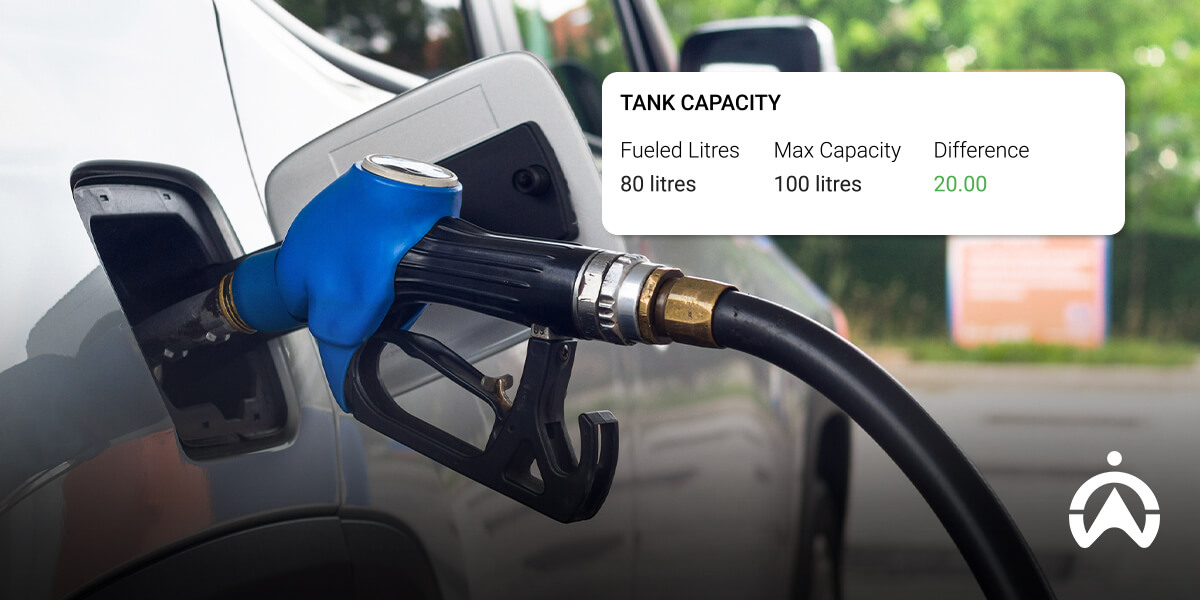
Fuel Sensors Various fuel monitoring devices track different metrics, such as fuel levels and consumption patterns. Fuel level measures the amount of fuel that is in the tank of a vehicle at any given time. It can either be expressed as the amount of litres, or as the percentage of the tank that is full.
Fuel Reports The key idea of this report is for managers to do a review and check whether there are any suspicious refuels. This could mean checking whether refuels happened as the drivers claimed, checking that the amount of fuel refuelled matches the amount paid on the receipt, checking the average number of refuels for the period, etc.
These would all indicate that there is a potential fuel problem that requires investigation, such as;
Drivers could be using the vehicles more for personal use, so now they have to refuel more frequently and the total fuel put into the vehicle for the date range is above average.
Drivers could be claiming back for fuel that they put into their personal vehicle (either none of the fuel went into the company car or only some of it did).
The driver might fill the vehicle tank, and then only a short number of km later (seen in the odometer), refuels the vehicle again – indicating potential theft.
Maintenance Reminders and Vehicle Health Monitoring
We have technology that is linked toCANbus and sensors that track the vehicle’s wear and tear over time. This allows for repairs to be scheduled on time and for vehicle maintenance to be done before too much damage has been accrued. These scheduled reminders come as alerts and keep the business owner updated on the status of the fleet at all times.
Idling Time Reduction
Manage vehicle idling time on the road with our telematics offering. A driver’s behaviour will be monitored and the fleet manager notified when the vehicle is idling. The time, location and duration of the idling event will be recorded on the fleet management system so that it can be analysed later.
Customised Reporting and Analytics
One of the benefits of Cartrack’s fleet management software is itsoverall reporting and analytics. This is aided by the use of telematics technology, which allows for a comprehensive overview of the fleet’s operations. Having this overview will make it easier to identify fuel consumption issues from all the possible sources.
Real-Time Monitoring and Route Optimisation
Having real-time GPS tracking makes it easier to monitor activities on the journeys a driver takes. This can be done by tracking the vehicle on a map and seeing whether they are sticking to the optimised route or not, and also by the use of AI cameras.
These features will give the fleet driver more options to see what is going on. This knowledge can then be used to optimise routes as the delivery happens, or later on in the review process, this will ultimately help in reducing fuel costs.
Driving Behaviour Analysis
As one of the leading causes of high fuel costs, bad driver behaviour needs to be addressed and managed. With Cartrack’s software, you will be able to monitor fuel-consuming behaviours, like acceleration, speeding, and idling.
Our telematics offering makes it easier to report on these events as they happen. Our technology can also notify drivers when they transgress, ultimately reducing the frequency of these incidents.
Running a business with a fleet of vehicles requires the fleet management software in place to be highly effective in reducing inefficiencies. One of these is high fuel consumption, a business expense that can easily get out of control when not managed correctly.
If you are looking for solutions to aid in reducing fuel consumption, then Cartrack is the ideal partner for your business. Contact us to get a quote or to hear more about our full offering.
FAQ
Q: What is the difference between fuel economy and fuel efficiency?
Q: Is the amount that a logistics company charges their customers influenced by the amount the company is spending on fuel?
A: Yes. Fuel expenses do impact how a business puts together its costing models. This is because fuel is an added expense on top of the actual product being delivered.
Fleet Logistics Management – Boost Your Supply Chain And Fleet Costs
Blog
11 minute read •
The logistics industry is constantly evolving. Is your operation equipped to stay ahead? Fleet logistics is just what the fleet doctor ordered to help you reduce costs, elevate efficiency, and enhance safety in your operation. Read on to discover the world-class solutions available at the tap of a button. What are logistics? The logistics […]
Fleet Fuel Card Integration – Empower Your Fleet With Efficiency and Security
Blog
9 minute read •
When it comes to managing fuel efficiently and reducing costs for your fleet business, fuel credit cards stand out as one of the top solutions. Explore the intricacies of these cards and discover how they can ease all your fuel expense-tracking headaches. Is it time to invest in some fuel cards? All your answers are […]
Truck Fleet Management – Here Is The Ultimate Guide For Your Fleet
Blog
17 minute read •
Managing a fleet of trucks, whether it’s a couple of vehicles or a couple of hundred, comes with a distinct share of challenges. These challenges can stand in the way of your entire fleet’s efficiency, increasing operational costs, and lowering vehicle lifespan, amongst many others. That’s why a good fleet management system is the key […]
 South Africa
 Botswana
 Malawi
 Mozambique
 Namibia
 Nigeria
 Swaziland
 Tanzania
 Zimbabwe
 Hong Kong
 Indonesia
 Singapore
 Malaysia
 Philippines
 Thailand
 New Zealand
 Vietnam
 Poland
 Portugal
 Spain
 United Arab Emirates