CAN Bus System – A Powerful Partnership for Fleet Data and Efficiency
Published
Reading time
12 minutes
Blog
Imagine your vehicle could tell you exactly what it needs, when it needs it and where it needs it. Even better, imagine it could also tell itself all this without your help.
Well, with CAN bus, it does exactly that, and a whole lot more.
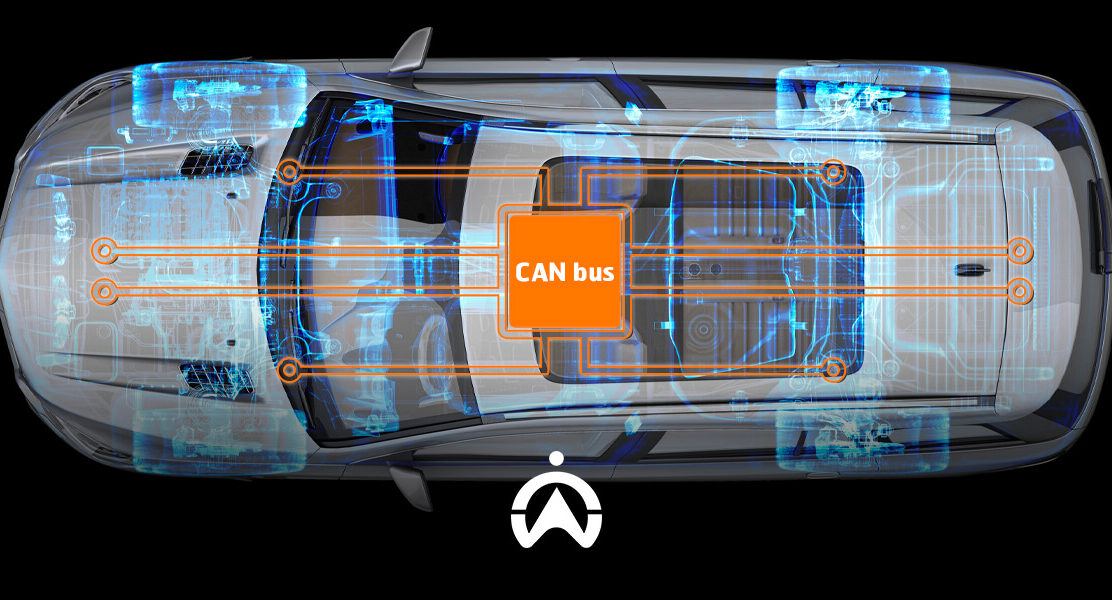
CAN bus, short for Controller Area Network Bus, is like the car’s own signal or network that allows all the components in your vehicle, from the engine to the brakes, to tune in and share information seamlessly.
This ‘communication’ allows your vehicle’s components or Electric Control Units (ECUs), such as the engine, transmission, and sensors, to share information in real time.
How does CAN bus work?
Instead of having one main component that gives orders, CAN bus allows for each ECU to talk to the others directly. This is useful in cars and factories as it ensures everything runs smoothly.
Within a CAN bus network, different features of a vehicle rely on continuous information exchange to ensure smooth operation. This collaborative communication is facilitated by special wiring, where each component is equipped with a microcontroller, a small computer, that handles processing incoming messages and sending outgoing ones.
The communication process involves these main steps:
Unified communication protocol
CAN bus acts like a language translator, ensuring that all parts can understand and communicate effectively with one another, allowing for a cohesive dialogue.
Message framing
The information is within types of “frames” or data packets. Each frame contains details, like the sender’s identity, the nature of the message, and the actual data payload. Think of it as a letter, the frame is the letter, the sender’s identity is the return address, the nature of the message is the subject line, and the actual data payload is the content.
Priority system
Some messages are more urgent than others, for this, CAN bus ensures that critical messages get sent through first.
Multi-access network
Unlike a one-on-one conversation, CAN bus allows multiple parts to talk at the same time. This ensures that everyone stays in the loop and that the ECUs don’t just wait their turn to “speak” and waste time.
Collision management
With all the parts “talking” at the same time, sometimes messages might clash with one another. If this happens, CAN encourage the components to take turns and try transmitting again.
To make this a bit simpler to understand, see the four process steps mentioned above as CAN Frames:
Data frame – the only frame for actual data transmission
Error frame – contains nodes to detect errors
Overload frame – activates when there is a delay between data and remote frame
Remote frame – a frame that requests information from a specific identifier
Understanding the CAN protocol message structure
Now that we’ve covered the journey from one ECU to another, let’s delve into the details of what exactly they communicate and the specific structure of their communication.
In a CAN bus system, how messages are structured plays a key role in making communication between devices efficient. The protocol relies on a data frame format that includes various fields, such as an identifier, control field, data field, and error detection mechanism.
Identifier: This shows how important each message is on the network. There are up to 2048 different levels of importance and each message gets its unique importance badge.
Data field: This is where the actual information is carried, moving between nodes in bite-sized pieces.
Cyclic redundancy check (CRC): Acting as a built-in error detector, CRC ensures reliable communication by spotting transmission errors and asking for a resend if needed.
Acknowledgement slot: A single bit that receiving nodes use to confirm they got a message successfully or to point out errors that need a resend.
Error frame: An optional part of CAN messaging that lets nodes signal if they spot a problem with their own messages or messages they get from other devices on the network.
Understanding three main types of CAN within the protocol message structure
The following three types influence the CAN protocol message structure in terms of data transmission speed and capabilities. Here’s how each type differs from one another and how they each work.
Low-speed CAN:
Often dubbed as fault-tolerant or ISO 11898-3, Low-speed CAN operates at speeds up to 125 kbps. It finds its niche in less critical systems like body control modules, specifically door locks, interior lighting, and window controls.
What makes it stand out? This CAN can still function, even if one wire in the bus decides to call it quits.
High-speed CAN:
Aka ISO 11898-2, is a High-speed CAN that takes things up a notch, reaching speeds of up to 1 Mbps. Tailored for time-sensitive applications like:- Aka ISO 11898-2, is a High-speed CAN that takes things up a notch, reaching speeds of up to 1 Mbps. Tailored for time-sensitive applications like: – Electronic braking systems: Ensuring rapid and precise response to braking commands – Transmission control: Managing gear shifting in automatic transmissionsIt boasts faster data transfer rates than its low-speed counterparts. However, it comes without the safety net of fault tolerance found in low-speed networks.
So, for example, in a car equipped with an anti-lock braking system (ABS), High-speed CAN facilitates rapid communication between the ABS sensors and the braking system.
CAN FD (flexible data rate):
Introduced by Bosch in 2012, CAN FD is an extension of high-speed networks with increased data rates, reaching up to 5 Mbps. It maintains backward compatibility with existing high-speed devices and systems.
Infotainment systems: Handling high-bandwidth data for multimedia and connectivity features.
CAN FD can also be used to transmit and process data from sensors for adaptive cruise control or automated parking.
The primary advantage of this technology is its efficient transmission of larger payloads compared to traditional CAN, making it well-suited for modern vehicles with increasingly complex electronic systems or advanced safety features.
The choice of which CAN type to use aligns with the specific needs of applications, ensuring optimal performance and reliability within both automotive and industrial contexts.
What are the advantages of a CAN bus network?
There are many reasons why CAN bus has become the preferred network architecture for modern vehicles and other complex systems.
Here are some of the key reasons why you might choose to use CAN bus:
Easy access: The CAN bus provides ‘one point-of-entry’ to communicate with all electric control units ECUs – enabling central diagnostics, data logging and configuration.
Simplified wiring: Goodbye, spaghetti wires. CAN bus replaces the old maze of point-to-point wires with a single pair of twisted cables. This saves space and weight, and simplifies maintenance, making cars lighter and easier to assemble.
Enhancedreliability: CAN bus is built for robustness. The protocol includes error detection and correction mechanisms, ensuring messages reach their destination intact. This translates to fewer electrical glitches and more dependable performance.
Scalability and flexibility: Adding new features becomes a breeze with CAN bus. Nodes can be easily connected or removed without major re-wiring, making it ideal for integrating new technologies and adapting to future advancements.
Cost-effectiveness: Fewer wires, simpler design, and easier assembly translate to lower production costs. Additionally, the system promotes less downtime and repair expenses, further benefiting both manufacturers and owners.
Improved data sharing: CAN bus facilitates efficient communication between various car systems. Engine parameters, sensor readings, and control commands flow freely, enabling features like real-time engine adjustments, adaptive cruise control, and even predictive maintenance.
Safety: The fast and reliable communication of CAN bus plays a crucial role in safety systems. Airbags can deploy faster based on real-time braking data, and stability control systems can react instantaneously to prevent skidding.
Reduced power consumption: The streamlined communication and efficient data sharing of CAN buses contribute to lower power consumption, leading to improved fuel efficiency and reduced environmental impact.
Beyond these, the advantages of CAN bus extend far beyond cars. It finds applications in diverse fields like aviation, medical equipment, industrial automation, and even building management systems, making it a truly versatile and powerful communication technology.
What is MQTT and its link to CAN bus?
Understanding how our devices perform using CAN bus data is crucial, but it comes with challenges like high data rates and limited bandwidth. That’s where MQTT steps in.
MQTT, or Message Queuing Telemetry Transport, is a lightweight messaging protocol designed for devices with limited resources and networks with low bandwidth, high latency, or unreliability. Common in IoT applications, MQTT helps sensors, actuators, and devices communicate efficiently.
In the world of CAN, MQTT ensures data goes smoothly from cars to the cloud, even when the network isn’t perfect
To set up this system for collecting car data, you can use tools like EMQX or eKuiper. EMQX is a language expert, and eKuiper is like a data collector that gathers data from various sources like HTTP, FileSystem, MQTT, and CAN bus, making sure everything gets translated correctly.
What types of vehicles use CAN bus?
CAN bus isn’t exclusive to cars — it’s the standard communication system in trucks, buses, ships, EV batteries, machinery, and more.
As advanced as this technology is, it has become the dominant network in most modern vehicles across the world, produced after the late 1990s.
How can you see if your vehicle has CAN bus:
1. Check your car’s owner’s manual or manufacturer’s website for specific information about the network architecture used. It often contains information about the technology and features integrated into your specific model.
2. Check the OBDII Connector. This is a port in your vehicle used for diagnostics. If your car has it, it likely supports the CAN (J1979) protocol. Most vehicles manufactured after 2008 have this port, it’s usually located beneath the dashboard near the driver’s seat. If your vehicle has this port, it’s likely equipped with CAN bus technology.
Why should you use CAN bus for fleets?
For one, CAN bus stands out as a strong multitasking system that also has a fault-tolerant protocol. These help ensure the software can accurately keep up with the demands of automotive applications.
Its simplicity, cost-effectiveness, reliability, and adaptability to harsh environments collectively enhance fleet efficiency, safety, and overall management.
Here are key reasons favouring the adoption of the CAN bus in fleet applications:
Real-time monitoring:
Efficient data transmission:
CAN bus enables real-time communication between various vehicle components, providing instant access to critical data such as engine performance, fuel consumption, and diagnostics.
Enhanced fleet visibility:
Fleet managers can monitor vehicle status, driver behaviour, and operational parameters in real time, allowing for proactive decision-making and immediate response to issues.
Comprehensive diagnostics:
Early issue detection:
The CAN bus facilitates continuous diagnostics, enabling early detection of potential mechanical or electrical issues within fleet vehicles.
Proactive maintenance:
Fleet managers can schedule preventive maintenance based on actual vehicle conditions, reducing the risk of unexpected breakdowns and minimising downtime.
Proactively addressing maintenance needs based on CAN bus data reduces the likelihood of major repairs, saving on repair costs.
Fuel efficiency improvements:
Optimising routes and addressing inefficient driving behaviours can lead to significant fuel cost savings.
Fleet optimisation:
Routing and logistics:
CAN bus data aids in optimising route planning and logistics, improving overall fleet efficiency.
Asset tracking:
Fleet managers can track the location and status of vehicles, enhancing asset visibility and security.
Data security and accuracy:
Secure communication:
CAN bus protocols are designed with a focus on secure communication, ensuring the integrity and confidentiality of data.
Accurate reporting:
Reliable data from the CAN bus supports accurate reporting for regulatory compliance, audits, and performance assessments.
Cartrack’s flawless integration with CANbus
Cartrack, a leading vehicle telematics and fleet management provider, leverages the advanced capabilities of CANBus to empower businesses across different fields.
Here are some headaches a CANBus can help you avoid:
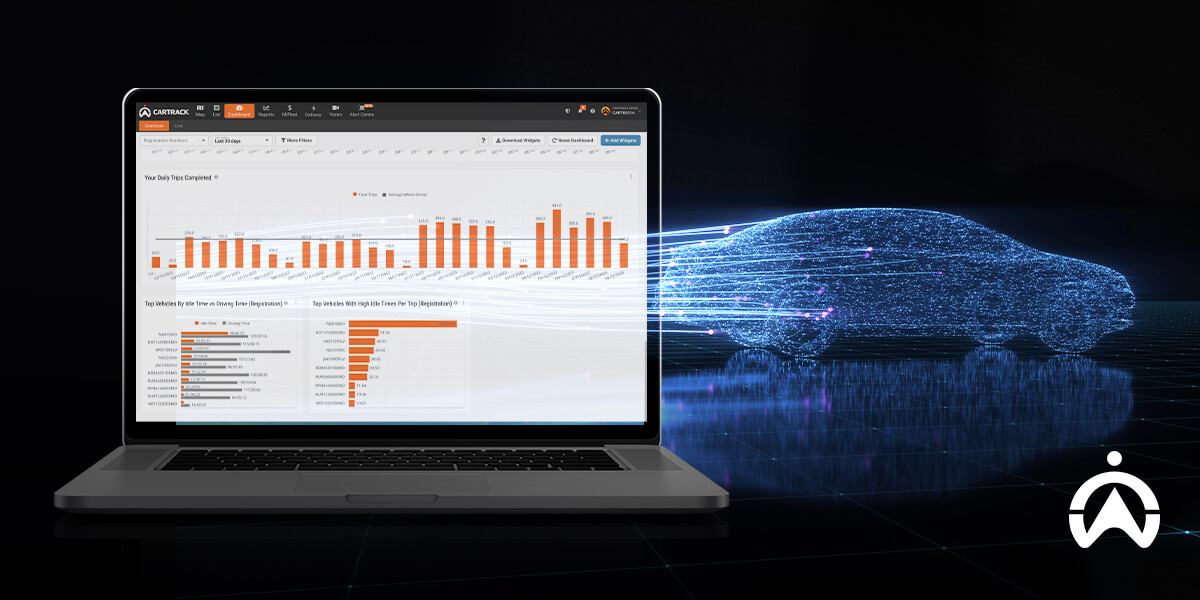
Data accessibility: One of the biggest pain points of not having a CANBus system in a vehicle is its limitation on the vehicle’s ability to transmit data between various systems and devices accurately. Cartrack can swiftly integrate with CANBus technology, bringing you real-time vehicle data and allowing fleet managers and companies to swiftly log CAN data to the cloud for easy access.
Safety concerns: CANBus allows businesses to monitor driver behaviour, including speeding, harsh braking, and erratic driving with accurate dashboard data showing vehicle speed, odometer, RPM etc, to be downloaded in real-time for analysis. Businesses can mitigate the risk of accidents and ensure the safety of their employees and assets.
Connection: Our technology even works in areas where GPS signals are unavailable like driving through a tunnel and underground parking, making this a huge asset for businesses in the mining industry.
Integrate Cartrack’s CANBus software in your business for enhanced insights and efficiency
Cartrack unleashes the potential of your fleet’s CAN bus systems, converting real-time data like fuel consumption, driver behaviour, engine health, cargo security and more into actionable insights easily. Allowing your fleet to improve performance, speed up productivity and maximise efficiency.
Understand what your vehicles are telling you and start with Cartrack today.
Other articles for you
Fleet Logistics Management – Boost Your Supply Chain And Fleet Costs
Blog
11 minute read •
The logistics industry is constantly evolving. Is your operation equipped to stay ahead? Fleet logistics is just what the fleet doctor ordered to help you reduce costs, elevate efficiency, and enhance safety in your operation. Read on to discover the world-class solutions available at the tap of a button. What are logistics? The logistics […]
Fleet Fuel Card Integration – Empower Your Fleet With Efficiency and Security
Blog
9 minute read •
When it comes to managing fuel efficiently and reducing costs for your fleet business, fuel credit cards stand out as one of the top solutions. Explore the intricacies of these cards and discover how they can ease all your fuel expense-tracking headaches. Is it time to invest in some fuel cards? All your answers are […]
Truck Fleet Management – Here Is The Ultimate Guide For Your Fleet
Blog
17 minute read •
Managing a fleet of trucks, whether it’s a couple of vehicles or a couple of hundred, comes with a distinct share of challenges. These challenges can stand in the way of your entire fleet’s efficiency, increasing operational costs, and lowering vehicle lifespan, amongst many others. That’s why a good fleet management system is the key […]
 South Africa
 Botswana
 Malawi
 Mozambique
 Namibia
 Nigeria
 Swaziland
 Tanzania
 Zimbabwe
 Hong Kong
 Indonesia
 Singapore
 Malaysia
 Philippines
 Thailand
 New Zealand
 Vietnam
 Poland
 Portugal
 Spain
 United Arab Emirates