Modern safety features like automatic braking can lower rear-end crashes by 50% because they react much faster than a human can
While airbags and seatbelts are still the most important tools, new sensors now help drivers by watching blind spots and keeping a safe distance from other cars
Special features like louder alerts and larger buttons are a huge help for elderly drivers who might have slower reaction times or trouble seeing clearly
You can add an extra layer of safety to any car with Karooooo by using a tracker and getting all the perks that come with partnering with us
Car safety features that you should have today include collision prevention & detection, GPS tracking, high beams, braking systems, and a host of other advanced additional options. While unbelievably important, you can no longer stop at seatbelts and airbags. In today’s world, all car safety features go beyond the traditional ones.
The Insurance Institute for Highway Safety (IIHS) 2026 Safety Benchmark shows that cars with Automatic Emergency Braking (AEB) and Forward Collision Warning (FCW) brought down the number of car wrecks by 50%. The number of injuries is also reduced by just about the same percentage! This shows just how important tech-forward car features can be.
Familiarise yourself with the importance of safety for both you and your car, but also consider key features that are more than just the in-vehicle perks. In this blog, we’ll let you in on the most crucial car safety features, how features have evolved, and what Karooooo can do to maximise your car safety.
What safety features are important for a car to have?
Safety features that are importantfor a car to have are things like seatbelts, airbags, and windscreen wipers, but also Automatic Emergency Braking (AEB), Electronic Stability Control (ESC), and adaptive cruise control (ACC). The best in care safety should always be a combination of traditional features and newer, more tech-advanced features.
What is a safety feature?
A safety feature is something that’s been created or designed to protect you from harm and prevent potential damage. These technologies are designed to predict potential risks and react appropriately, help you during distressing moments, and ensure the safety of you & your family.
What is the most important safety feature on a car?
This question is a bit tricky to tackle with total confidence. Firstly, there isn’t just one “most important safety feature”, and secondly, you have to look at this question from different perspectives.
Are you trying to measure safety by prevention, survivability, or both? Either way, it’s generally believed that seatbelts and airbags are the most important safety features.
Following this, it’s the headlights and windscreen wipers. And from an advanced tech perspective, look for Automatic Emergency Braking (AEB) systems, which predict a potential crash and slow the car down. Electronic Stability Control is another important modern consideration, which stops you from losing control when your car skids.
What are the top safety criteria for your vehicle checklist?
Seatbelts:Ensure your seatbelts pull and retract easily and that they aren’t frayed. While traditional, it’s still important to mention, especially given how frequently people forget to buckle up before hitting the road. Seatbelts help by massively reducing injuriesand stopping dangerous ejection from the car.
Airbags: Verify they’re in place to protect you and your passengers from hard surfaces in the event of an accident. Airbags started with two in the front seats, increasing to about six in the early 2000s. Now, we see anywhere from seven to sixteen airbags installed carefully around the interior of the car.
ADAS (Adaptive Driver Assistance Systems)
ACC: Always check that these detection systems are working before you drive off. Adaptive Cruise Control automatically slows down your car to keep a safe distance, usually matching the speed of the car that’s in front of you. It’ll use something like a camera, radar, or sensor to comfortably adapt to the change in speed.
Collision avoidance
AEB: Check that your car is equipped with this emergency function and can initiate braking. Automatic Emergency Braking is a system that brakes or slows the car down if it detects that a crash is about to happen. It’ll also detect that you’re likely not responding quickly enough.
ESC:Confirm that this is present in your car. Electronic Stability Control stops you from losing control when the car skids. It works by looking at the angle of the steering wheel & the direction your car is going in, then quickly recalculating and adjusting if the car starts to swerve.
Blind spot monitoring:Look for sensors or cameras that can give you alerts when there are vehicles in your blind zones. Blind spot monitoring warns you about cars that are out of view. There are different ways for the alerts to show up, but they usually manifest as a beep or an icon that flashes in your sideview mirror.
What cars have good pre-installed safety features?
Cars that have good pre-installed safety features include compact sedans, compact SUVs, and mid-sized luxury cars. Beyond the successes in crash and safety tests, these cars are typically considered the safest because of the advanced tech used in their safety features.
🚗 Compact sedans: These are usually praised for their rear seatbelt reminders, ADAS, lane assist alerts (lane-keeping & lane departure), high-beam lights, and collision intervention warnings.
🚙Compact SUVs: These are praised for their strong structural designs, numerous airbags, and integration of advanced technologies (like ACC, collision warnings, & the like), even in their most basic models.
💎Mid-sized luxury cars: These typically set quite the standard when it comes to high-quality and precise safety features. Most models are pre-equipped with all the safety benefits you could want in a car, with the most recent models also including perks like more airbags (especially side & knee ones), AEB, and driving assist features (distance control & curve management).
How does modern technology support older drivers?
Take a look at how modern technology supports older drivers with this problem vs. solution table:
The pain point
The safety solution
How does this help?
Fragile bodies in an accident
Airbags and extra padding/support on headrests and seats
headrests and seats They do much of the heavy lifting, absorbing the impact in a collision and cocooning the fragile bodies of elderly drivers.
Impaired visibility
Driver & vision assist features (lane keeping assist, left-hand turn assist, blind spot warnings, and reverse cameras)
Visual & audio indications for these features keep elderly drivers vigilant, especially when head turning is difficult.
Disorientation
Live GPS tracking
This can provide peace of mind and keep family members connected to elderly loved ones while they’re on the road.
Arthritis & mobility issues
Convenience technology
Larger steering wheels, push-to-start buttons, power boot/tailgate buttons, and power seat buttons remove physical strain.
Slow reaction time or reflexes
AEB
Most modern cars include pedestrian detection and large animal detection, in case an obstacle suddenly appears.
Although these safety features may be important regardless of age, we must keep our elderly drivers at the centre of the safety conversation.
Natural age-related changes start to happen as time passes, like vision becoming poorer, reaction times becoming slower, and loss of muscle strength. The safety features in a car must accommodate those changes while keeping drivers comfortable.
Much like children, the elderly are extremely vulnerable people when they’re on the roads. Their vulnerability makes them prone to serious injury and a loss of direction sense, which is why it’s important to pay attention to and consider certain safety features.
EVs vs ICE cars: Which wins on safety?
When looking at EVs (electric vehicles) and ICE (internal combustion engine) cars, it’s EVs that truly win on safety.When you break it down, EVs are less likely to catch on fire, are sturdier and stronger in their build, and their safety technology features tend to be far more advanced.
Here’s why:
Extra crumple space: EVs don’t have an engine in the front of the car like ICE vehicles. Because of this, we see an advanced energy-absorbing structure. In the case of a head-on collision, the car crumples in a more effective, less impactful way, ensuring better protection for the cabin and passengers.
Stability and anchoring: EVs have heavy battery floors, which create an anchor that has a very low centre of gravity. This design makes EVs nearly immune to rolling over in an accident, which is something traditional ICE vehicles are prone to.
Fire hazard chances: Despite popular belief, recent data shows that ICE vehicles are actually more likely to be a fire hazard compared to their EV counterparts, thanks to the former’s highly flammable fuels and hot exhaust systems.
Can Karooooo help you keep your car safe?
Karooooo can absolutely help you keep your car safe.We understand that safety extends beyond in-vehicle alerts and warnings, and while pre-installed safety measures are great, they’re not always enough. We take security and protection to the next level, adding onto what’s already existing and giving you complete peace of mind. This is where we excel.
Why should you choose us?
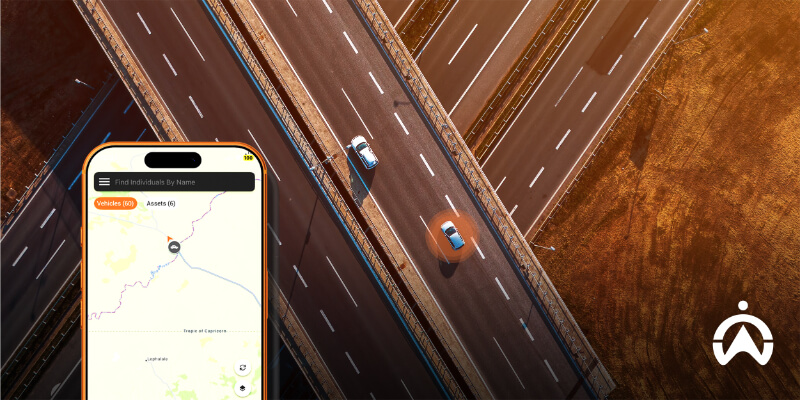
When you choose Karooooo as your provider in car safety, you’ll get access to the Karooooo app and its many features.For an affordable price (with free tracker installation), the app will show you where your car is at all times, thanks to our live GPS tracking.
You can location-share with loved ones, and they can reach you quickly if an accident or incident occurs. Our app is easy to use, making it ideal for you and all members of your family.
What Karooooo-specific safety options are available to you?
We have numerous safety and security solutions that go beyond standard features. Our Vision solutions add an extra layer of security, offering Road and Dual Vision dashcams. The Road is a simple road-facing dashcam, while the Dual option is both road- and cabin-facing.
Invest in our backup wireless tracking device, the Karooooo Tag, which is immune to remote jamming. All of our traditional hardwired GPS tracking devices have anti-jamming detection, and in the case of remote jamming, the signal will switch to the Tag, which works on a radio frequency that alerts our control room about your car’s movement. This helps our teams move in to retrieve your car even quicker!
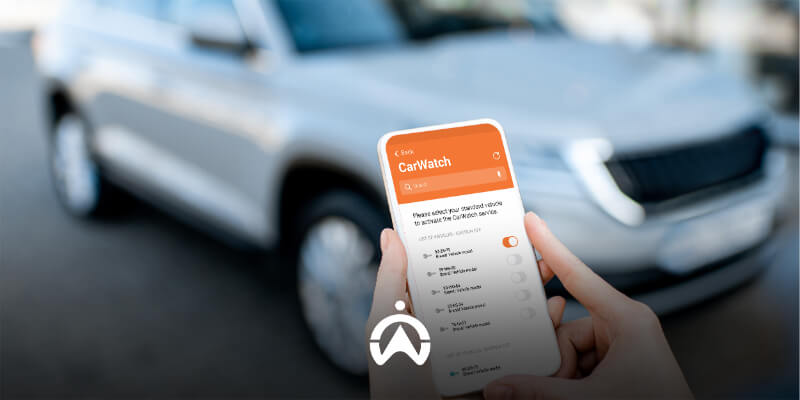
We also offer CarWatch, your personal car guard. You can keep a watchful virtual eye on your car via the Karooooo app and be notified of any strange or unrecognised movement.
What about accidents and car recovery?
Our safety and security measures for you also extend to the car itself,and in the case of theft, we have extremely responsive stolen vehicle recovery (SVR) teams all across the country that are ready to help you.
Our crash detection featuremeans that in the case of an accident, our control room service agents will be notified immediately and will quickly send help. Knowing your car’s exact location means there isn’t an uncoordinated scramble to get emergency services quickly enough.
Final takeaway: Getting the best protection for your car
When you’re choosing a car, you’ve got to direct your focus towards the latest in safety tech, but for the right reasons. The right tech isn’t just to flaunt; it’s about securing complete confidence and calm. Specialised & sophisticated features that were once seen as expensive extras are now the most crucial tools for you and your family.
Karooooo lifts you to new safety heights. Your car’s features manage some aspects of on-road safety, and we manage the others. We give you all the extra safeguards and benefits that go beyond just driving, giving you total visibility, solid support, and complete satisfaction.
Drive smarter, drive safer, and ensure you and your family are completely protected. Chat with our dedicated professionals today and choose a package that suits your needs!
Frequently asked questions about car safety
Who benefits from oil price increases?
Naturally, oil suppliers & companies, governments, and alternative energy source companies benefit from oil price increases. Oil companies excel and profit from demand when prices go up. Governments in most countries receive a fixed fuel tax cut, which rises with price increases. Alternative energy providers see an influx of people looking for other options to fuel use, driving up their profits.
What is fuel volatility?
Fuel volatility refers to how fuel vapourises when it’s being burnt in an engine. This is how traditional ICE (internal combustion engine) vehicles work, and fuel volatility is necessary for petrol cars to operate. Fuel volatility is usually measured in Reid Vapour Pressure (RVP), which measures the pressure. This distinguishes between a slow and sputtered or easy car start.
Is oil going to crash in 2026?
Whether or not oil is going to crash in 2026 is a difficult question to answer because it’s based on geopolitical tensions and whether they continue or resolve. If disruptions continue, it might crash, especially because supply routes (like the Strait of Hormuz) have been blocked for certain countries. This is what leads to volatility and uncertainty.
Other articles for you
Fleet Logistics Management – Boost Your Supply Chain And Fleet Costs
Blog
11 minute read •
The logistics industry is constantly evolving. Is your operation equipped to stay ahead? Fleet logistics is just what the fleet doctor ordered to help you reduce costs, elevate efficiency, and enhance safety in your operation. Read on to discover the world-class solutions available at the tap of a button. What are logistics? The logistics […]
Fleet Fuel Card Integration – Empower Your Fleet With Efficiency and Security
Blog
9 minute read •
When it comes to managing fuel efficiently and reducing costs for your fleet business, fuel credit cards stand out as one of the top solutions. Explore the intricacies of these cards and discover how they can ease all your fuel expense-tracking headaches. Is it time to invest in some fuel cards? All your answers are […]
Truck Fleet Management – Here Is The Ultimate Guide For Your Fleet
Blog
17 minute read •
Managing a fleet of trucks, whether it’s a couple of vehicles or a couple of hundred, comes with a distinct share of challenges. These challenges can stand in the way of your entire fleet’s efficiency, increasing operational costs, and lowering vehicle lifespan, amongst many others. That’s why a good fleet management system is the key […]
 South Africa
 Botswana
 Malawi
 Mozambique
 Namibia
 Nigeria
 Swaziland
 Tanzania
 Zimbabwe
 Hong Kong
 Indonesia
 Singapore
 Malaysia
 Philippines
 Thailand
 New Zealand
 Vietnam
 Poland
 Portugal
 Spain
 United Arab Emirates